
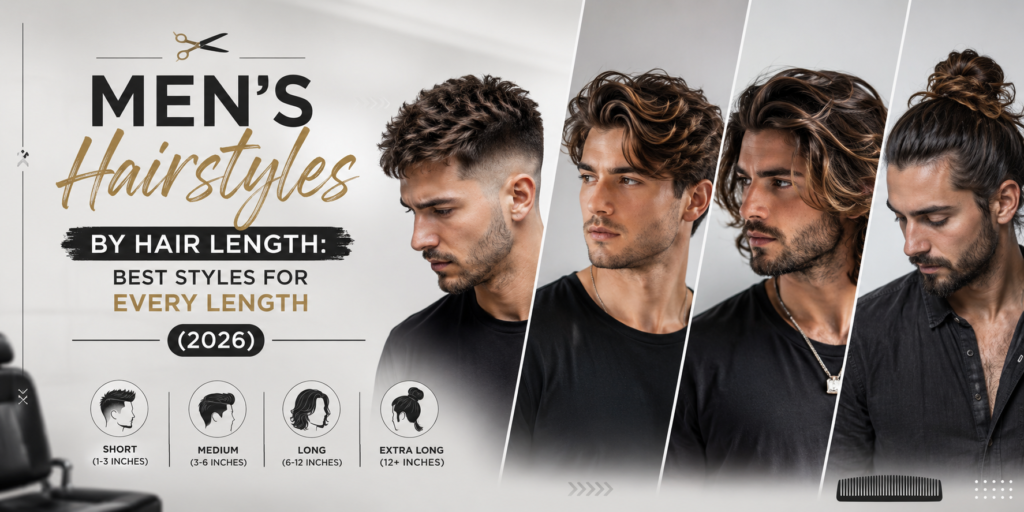
Standing in front of the mirror wondering what to do with your hair? You’re not alone. Most guys hit a point where they just don’t know what haircut fits their length anymore. This guide breaks it down by length, so you know exactly what works for you right now.
By the end, you’ll know which men’s hairstyles by hair length actually suit your face, texture, and daily routine. No guesswork, no generic advice. Just real answers you can take straight to your barber.
Understanding Hair Length Categories
Hair length isn’t just about inches. It’s about what your hair can actually do at that length.
Barbers usually split hair into four buckets: short, medium short, medium, and long. Each one opens up different hairstyle options and closes off others.
Knowing your category first saves you from asking your barber for something your hair simply can’t pull off yet. It’s the starting point for every good haircut conversation.
How to Measure Your Hair Length
Grab a ruler and pull a section of hair straight up from your scalp. That’s your real length, not the length it looks like when it’s lying flat.
Most guys underestimate how long their hair actually is because gravity and curl pattern hide a few inches. A quick check every few weeks keeps you honest about where you stand.
If you’re unsure, ask your barber to measure at your next visit. They’ll give you an exact number you can use to plan your next cut.
Short Hair (0.5–2 Inches)
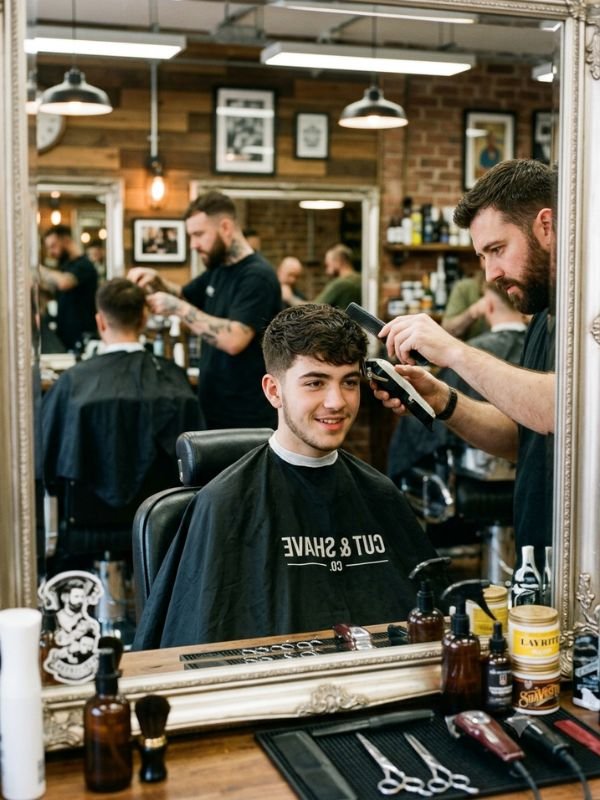
Short hair is the easiest length to keep sharp with almost zero effort. It’s why so many guys default to it during busy seasons of life.
This range covers everything from a near shaved head to a couple inches on top. It’s low maintenance, practical, and always looks intentional when it’s done right.
If you want a clean haircut that needs barely any styling time in the morning, this is your zone.
Precision and Polish
Short hair lives or dies by the edges. A blurry hairline or uneven fade ruins the whole look, even if the length is perfect.
This is where a skilled barber earns their money. Precision at this length isn’t optional, it’s the entire point.
Ask for crisp lines around your ears and neck. That polish is what separates a sharp cut from a lazy one.
Crew Cut
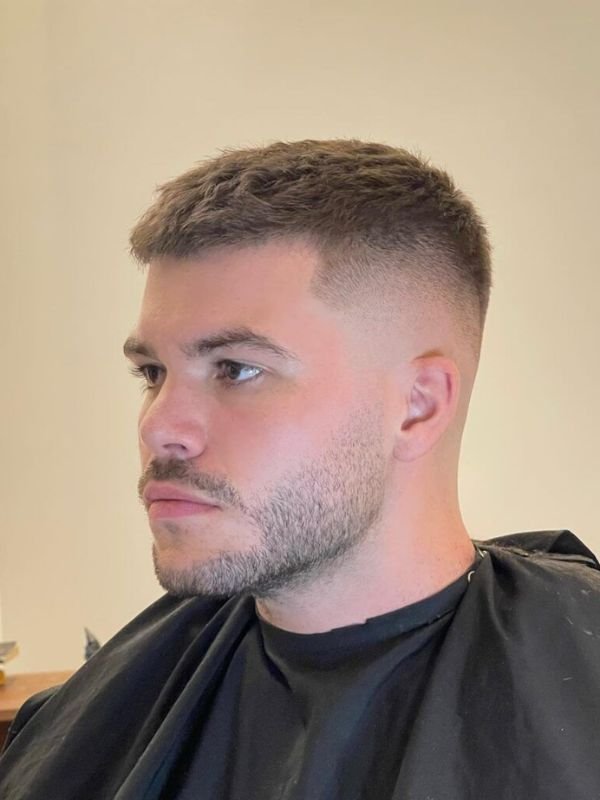
The crew cut is about as classic as it gets. Short on the sides, slightly longer on top, and zero fuss involved.
It’s a classic men’s haircut that’s survived decades because it just works. Office, gym, weekend, doesn’t matter, it fits everywhere.
You can style it with a bit of texture on top or leave it natural. Either way, it takes under five minutes to look put together.
Buzz Cut
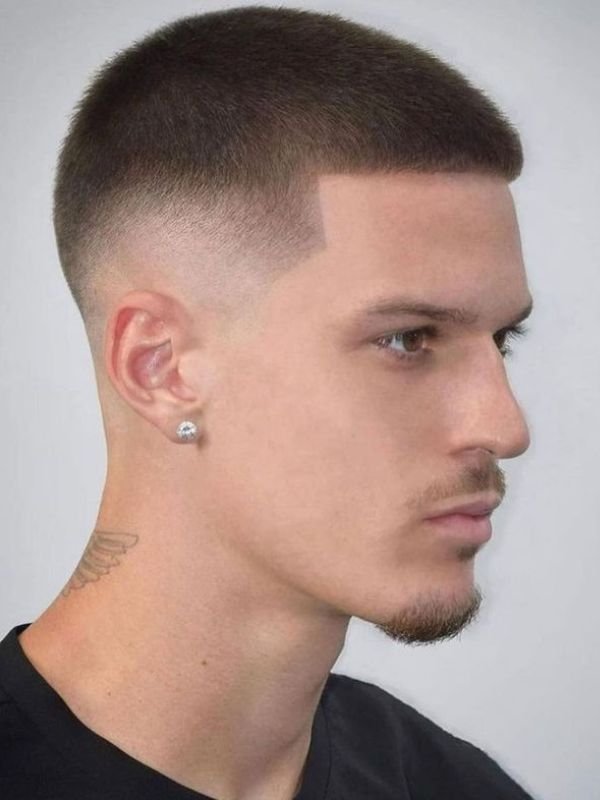
Nothing beats the buzz cut for pure convenience. One length all over, done with clippers in minutes.
It’s the ultimate low maintenance haircut, especially if you’re dealing with thinning hair or just want to simplify your routine. Some guys keep it as short as a number one guard, others go slightly longer for more coverage.
Heads up though, buzz cuts show every bump and mark on your scalp. Make sure your head shape can handle that much exposure before you commit.
Taper Fade
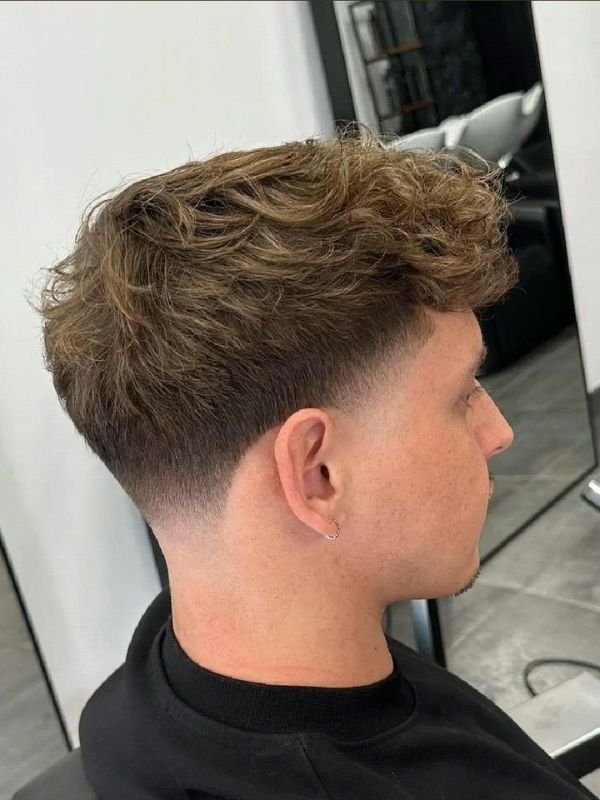
The taper fade blends short sides into a gradually longer top. It’s probably the most requested cut at barbershops right now.
What makes it so popular is flexibility. You can pair it with a fade, an undercut, or keep it subtle for a more professional haircut look.
Ask specifically for a low, mid, or high fade depending on how dramatic you want the transition. Each version changes the whole vibe of the cut.
Ivy League
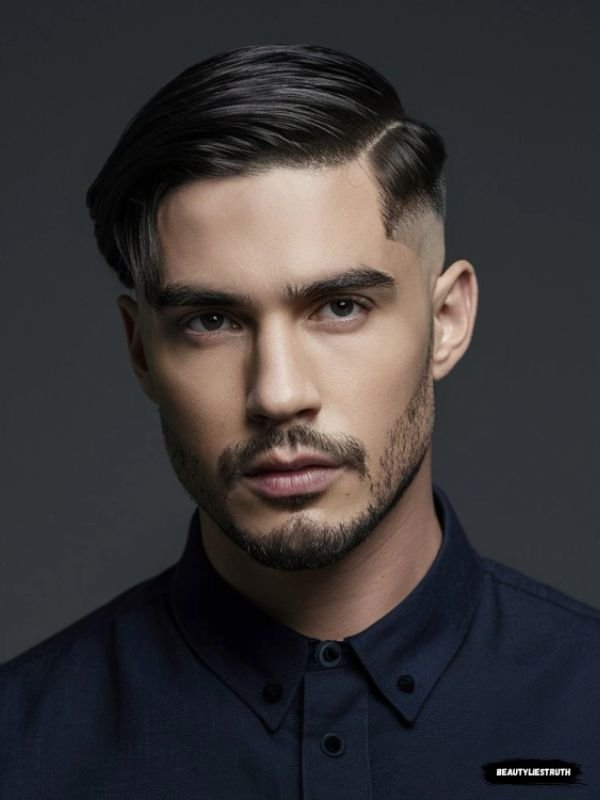
Think of the Ivy League as a crew cut’s slightly fancier cousin. It’s got a touch more length on top for styling options.
This one leans into sharp haircut territory without looking overdone. You get enough hair to sweep it to the side or push it back with a light product.
It’s a favorite among guys who want something between buzzed and businesslike. Clean, controlled, and still easy to manage daily.
Short Length Hairstyles for Men
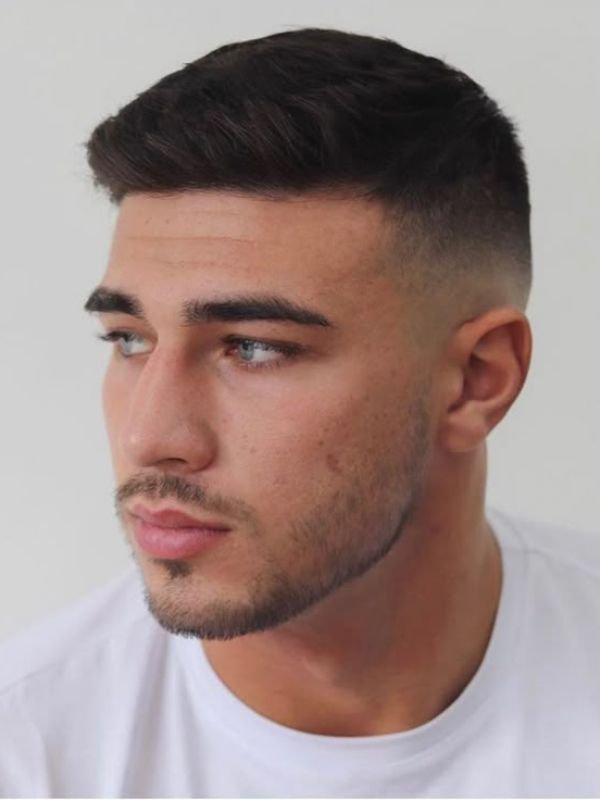
Beyond the main styles, short hair opens doors to combinations like a fade with a hard part, or a buzz cut with a beard for contrast.
Textured crops also work at the shorter end of this range if your hair has natural wave or curl. A bit of short textured haircut styling adds personality without extra length.
The beauty of short hair is how quickly you can switch things up. A trip to the barber every two to three weeks keeps everything looking fresh.
Medium-Short Hair (2–4 Inches)
This is the sweet spot where hair starts having real personality but still stays manageable. You get texture and movement without the daily styling marathon.
It’s a length that works whether you’re heading into the office or out for the weekend. Most guys land here because it balances effort and payoff so well.
If you’ve been stuck between short and long, this range might be exactly what you’re looking for.
Versatility Peak
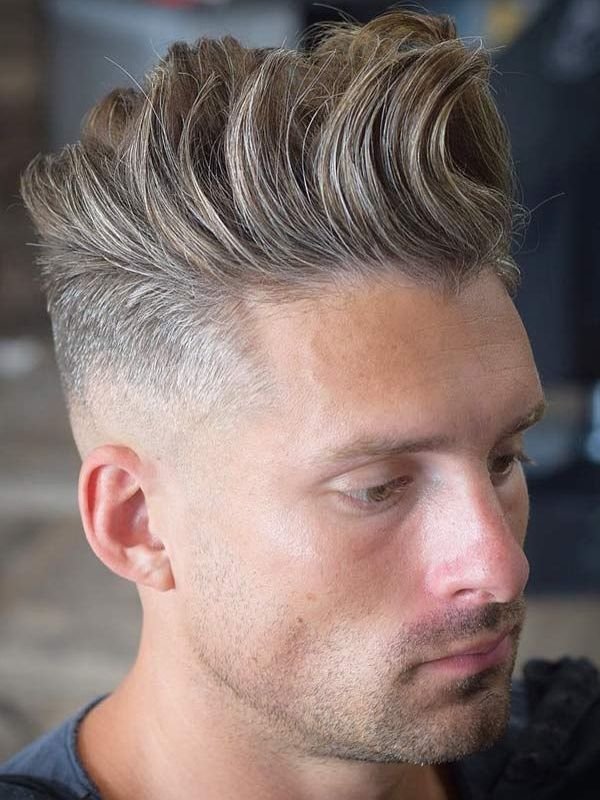
Two to four inches is genuinely the most versatile hairstyle range out there. You can slick it back, leave it messy, or add a part depending on your mood.
This flexibility means one haircut can give you multiple looks throughout the week. Product choice does most of the heavy lifting here.
Switch between a pomade for shine or a matte clay for a natural finish, and the same cut looks completely different.
Textured Crop
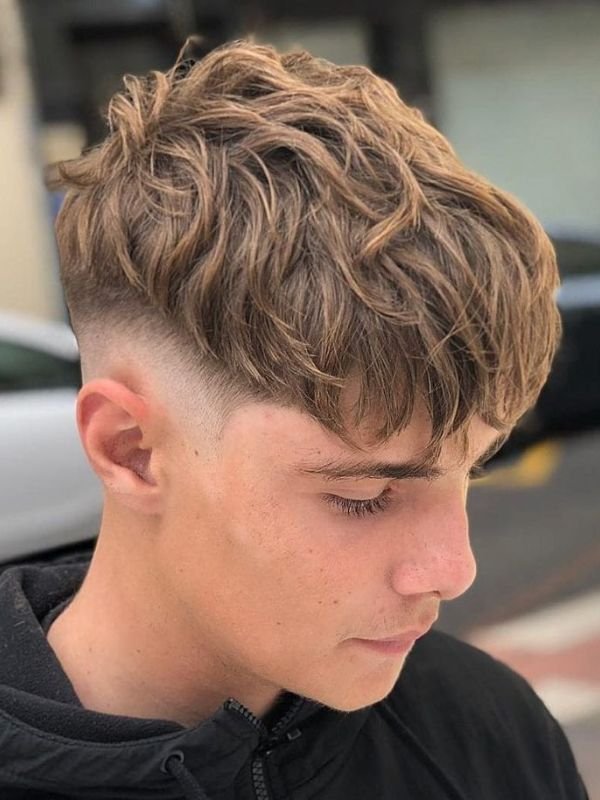
The textured crop brings choppy, layered texture on top with shorter, tapered sides. It’s become a modern staple for good reason.
This cut works with almost every hair type, and it hides thinning hair better than most styles at this length. A little hair wax scrunched through damp hair brings out the texture instantly.
It’s also forgiving if you’re growing out a buzz cut and don’t want an awkward in between phase.
Classic Side Part
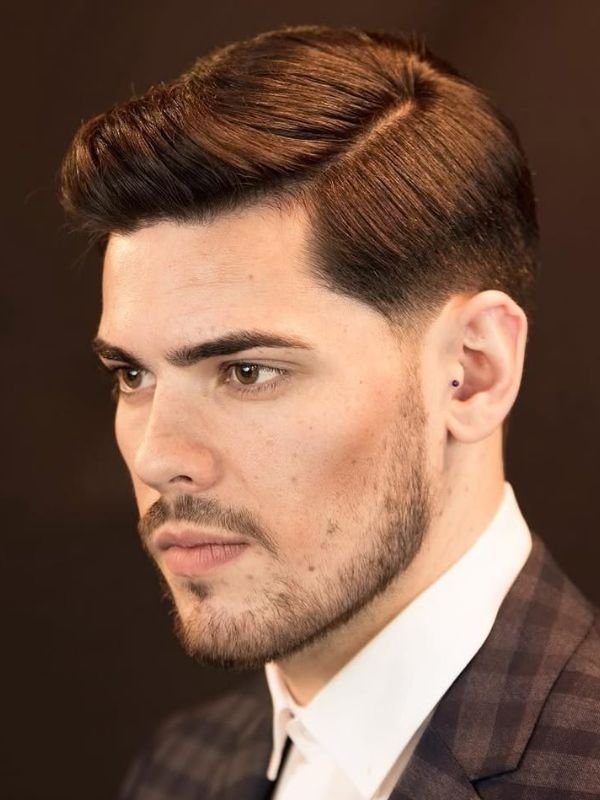
The classic side part never really left, it just keeps getting reinvented. A defined part with combed sides reads as instantly polished appearance.
This one’s a go to for job interviews, weddings, or any day you need to look sharp without trying too hard. A comb and a light hold product are all you need.
It pairs beautifully with a fade underneath for a more modern twist on an old favorite.
Quiff Haircut
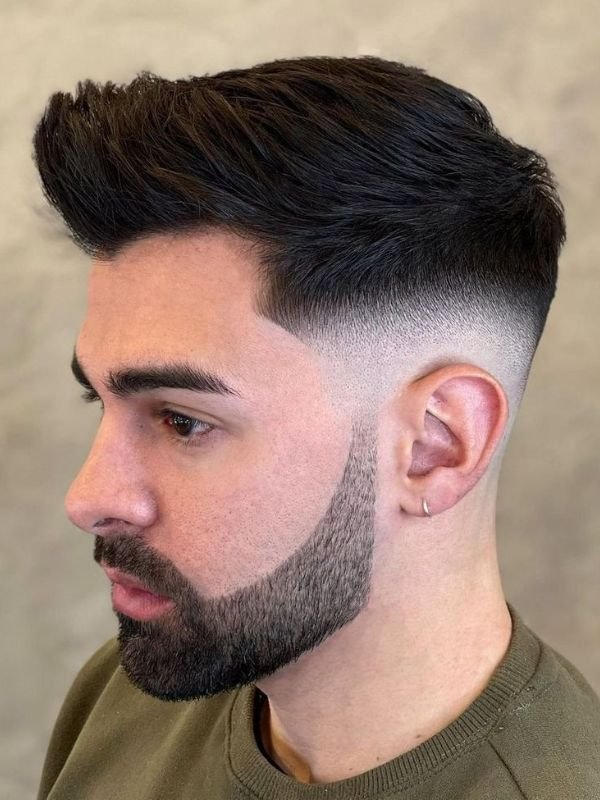
The quiff haircut takes the front section and pushes it up and back for height and volume. It’s bold without crossing into flashy territory.
You’ll need some styling products with strong hold to keep it standing throughout the day. Blow drying the front section upward before applying product makes a huge difference.
It works especially well if you’ve got straight to wavy hair, since curls can fight the shape you’re going for.
Medium Hair (4–6 Inches)
Medium hair is where things get genuinely fun. You’ve got enough length for real movement and styling variety, but it’s still manageable day to day.
This range demands a bit more from your grooming routine, but the payoff is a look with actual character and movement. It’s not a lazy length, it’s a deliberate one.
Guys who commit to medium hair usually end up loving the extra styling options it opens up.
Character and Movement
At this length, your hair starts moving with you instead of sitting stiff. Waves show up more, and natural texture becomes a feature instead of something to fight.
This is where hair volume and natural flow really shine. A blow dryer and a round brush can add serious lift if you want more body.
Even without much styling, medium hair naturally looks a bit more lived in and interesting.
Modern Pompadour
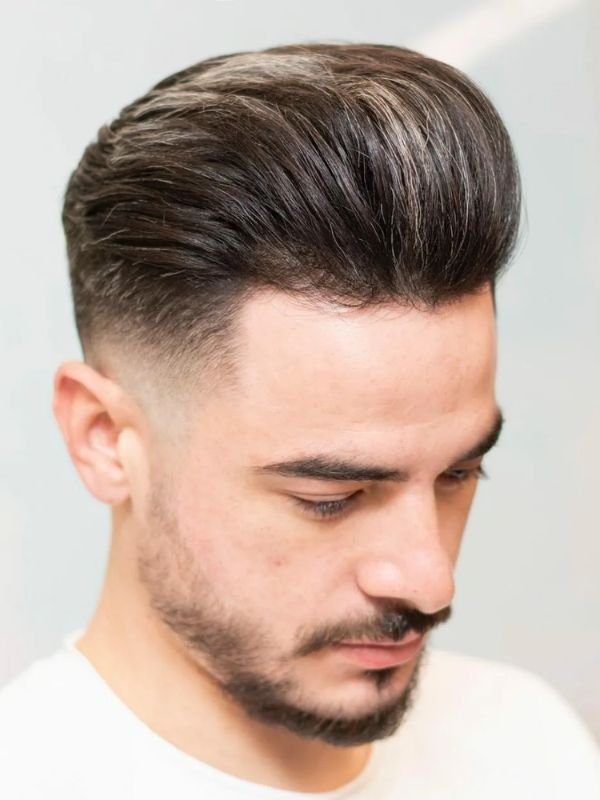
The modern pompadour takes the height of a quiff but adds more volume and a smoother finish. It’s a statement cut that still reads as professional.
You’ll want a strong hold pomade and a bit of patience to get the shape right each morning. Once you’ve practiced it a few times, it becomes second nature.
This style photographs incredibly well, which is part of why it’s so popular for events and headshots.
Slick Back
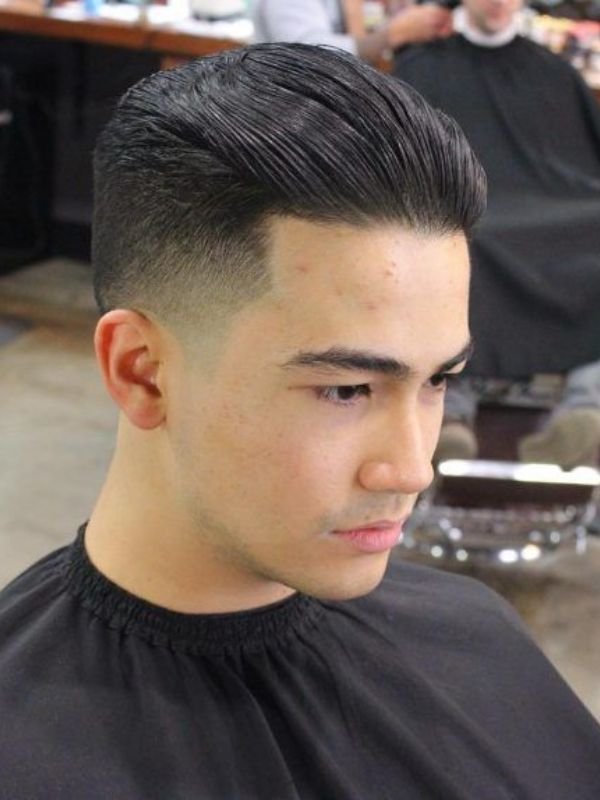
The slick back hairstyle takes all your hair and pushes it straight back for a sleek, controlled look. It screams confidence without saying a word.
A hair oil or wet look pomade gives you that glossy finish that defines this style. Comb it back while your hair’s still damp for the smoothest result.
This one works especially well for guys with straight or slightly wavy hair since it lays flatter naturally.
Fringe Styles
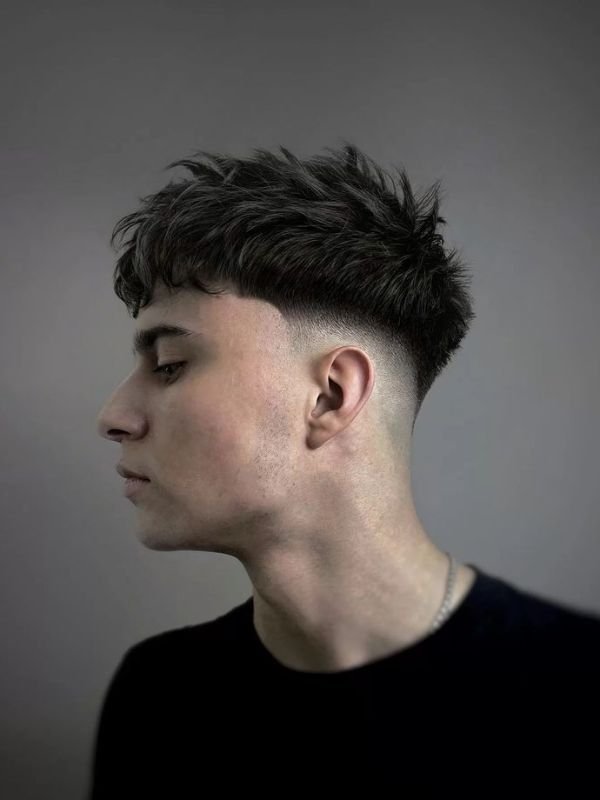
Fringe hairstyle options bring the front section down over the forehead instead of pushing it back. It’s a softer, more casual vibe.
This works great with a textured hairstyle approach where the ends are choppy rather than blunt. A light matte clay keeps it looking natural instead of stiff.
Fringes are forgiving for guys who don’t want to spend much time styling but still want something more interesting than a plain part.
Medium Length Hairstyles for Men
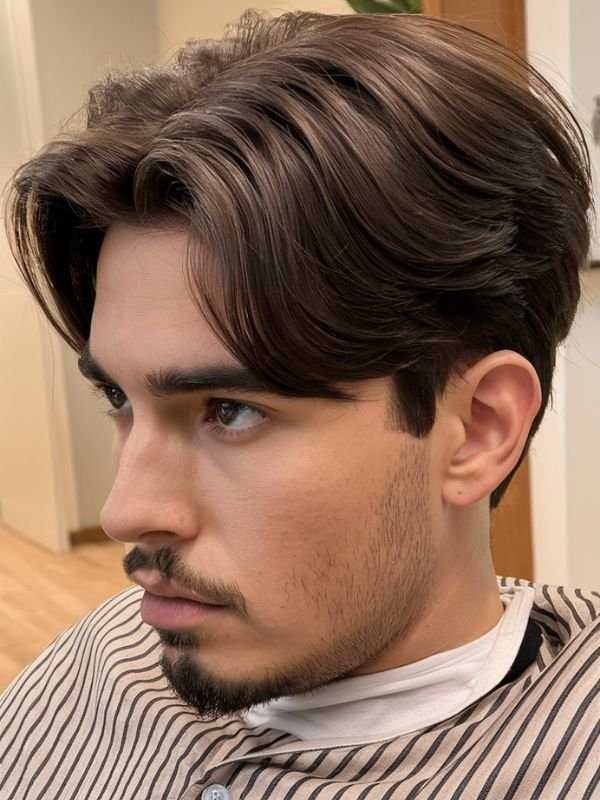
Beyond the main options, medium hair also handles curtains, brushed back waves, and even a loose man bun if your hair’s thick enough to hold it.
This length gives you room to experiment without full commitment to long hair. It’s an everyday hairstyle that adapts to whatever your week throws at you.
Try a few different partings before settling on your go to look. Sometimes the smallest change makes the biggest difference.
Professional Medium Length Hairstyles for Men
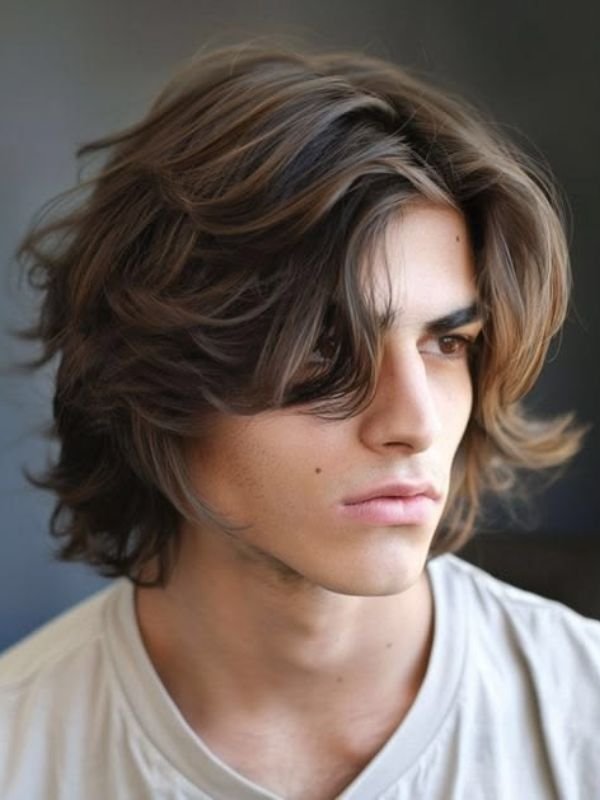
Worried medium hair won’t fly at the office? It absolutely can with the right approach.
A neat side part or a controlled slick back reads as professional look every time, regardless of the extra length. The key is keeping it tidy, not necessarily short.
Regular trims to maintain shape, paired with a light hold product, keep medium hair office appropriate without sacrificing personality.
Long Hair (6+ Inches)
Long hair is a genuine lifestyle choice, not just a haircut decision. It takes patience, upkeep, and a bit of confidence to pull off well.
This length rewards guys who stick with the growing process and invest in proper care along the way. The result is a look that’s hard to replicate at any shorter length.
If you’re considering this route, know that it’s as much about maintenance as it is about style.
Commitment and Statement
Growing hair past six inches takes months, sometimes years, depending on your hair growth rate. It’s a real styling commitment.
But the payoff is a look that stands out. Long hair on men has become a genuine statement of personal style rather than a rebellious choice.
Just be ready for the awkward in between stages. Every long hairstyle passes through a rough patch before it looks intentional.
Long Layered Cut
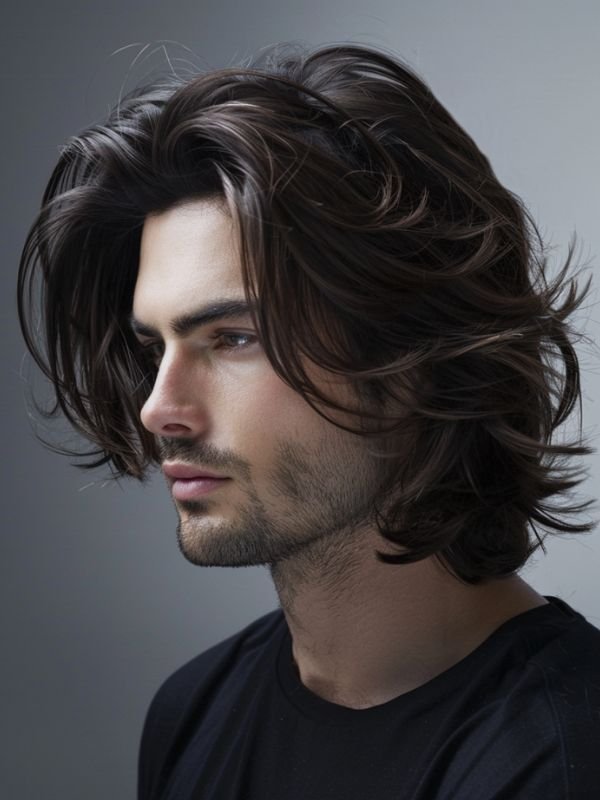
The long layered haircut adds shape and movement to hair that would otherwise look flat and heavy. Layers reduce bulk and add natural bounce.
This is especially useful for thick hair hairstyles, where too much weight can make hair sit lifeless without proper layering. Ask your barber for face framing layers if you want extra dimension near your jawline.
A leave-in conditioner keeps the ends healthy so the layers don’t look frizzy or damaged over time.
Man Bun
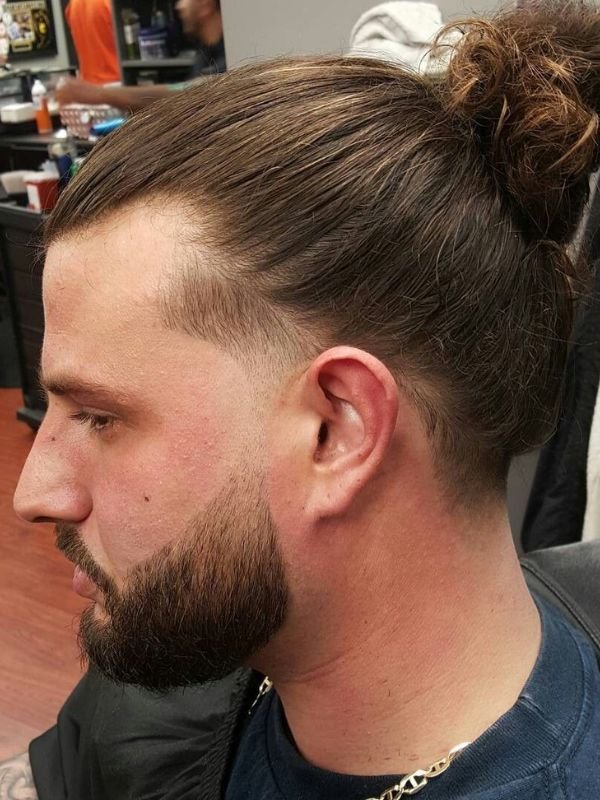
The man bun remains one of the most practical long hair options out there. Pull it up, secure it, and get on with your day.
It works best once you’ve got at least shoulder length hair to gather comfortably. A soft hair tie prevents unnecessary breakage compared to standard elastic bands.
Undercut sides paired with a man bun on top give the whole look sharper contrast if you want something less shaggy.
Shoulder-Length Hair
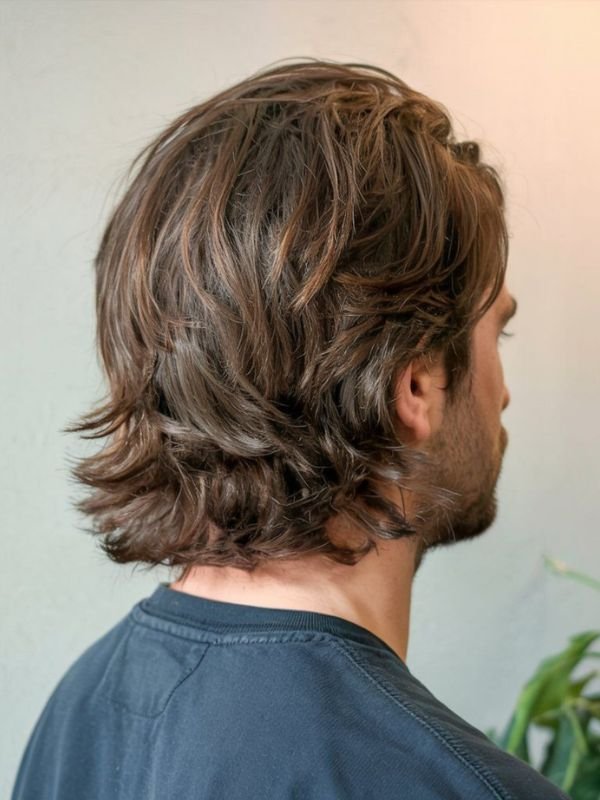
Shoulder-length hair sits right at that transitional point where you can wear it up or down depending on the day. It’s flexible in a way shorter styles just can’t match.
This length also handles waves and natural curl beautifully, since there’s enough weight to define the pattern without frizzing out. A sea salt spray enhances that texture if you’re going for a beachy, relaxed finish.
Regular trims every couple months keep split ends from creeping up the shaft and ruining your progress.
Matching Length to Face Shape
Length alone doesn’t make a haircut work, your face shape plays a massive role too. Getting this pairing right changes everything about how a style reads.
A face shape guide helps you avoid picking a cut that fights your natural bone structure. The goal is always a balanced hairstyle that complements what you’ve already got.
Bring a mirror photo to your barber consultation if you’re unsure. A good barber can spot your shape in seconds and steer you toward flattering options.
Oval Faces
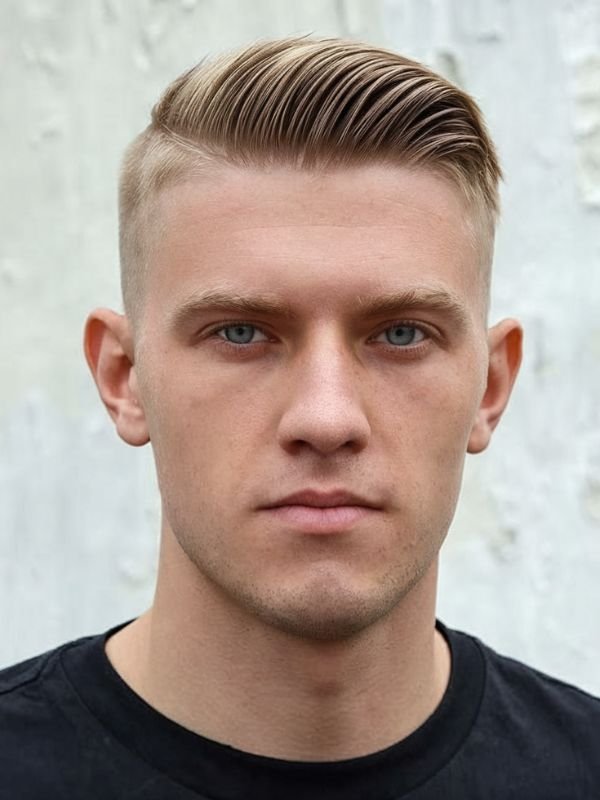
Oval faces are the lucky ones here, almost every length and style works. There’s very little facial structure correction needed.
Guys with oval faces can experiment freely between short crops, medium quiffs, or even long layered cuts. The proportions naturally balance most haircuts without extra thought.
If anything, avoid styles with too much height on top since it can make an already balanced face look stretched.
Round Faces
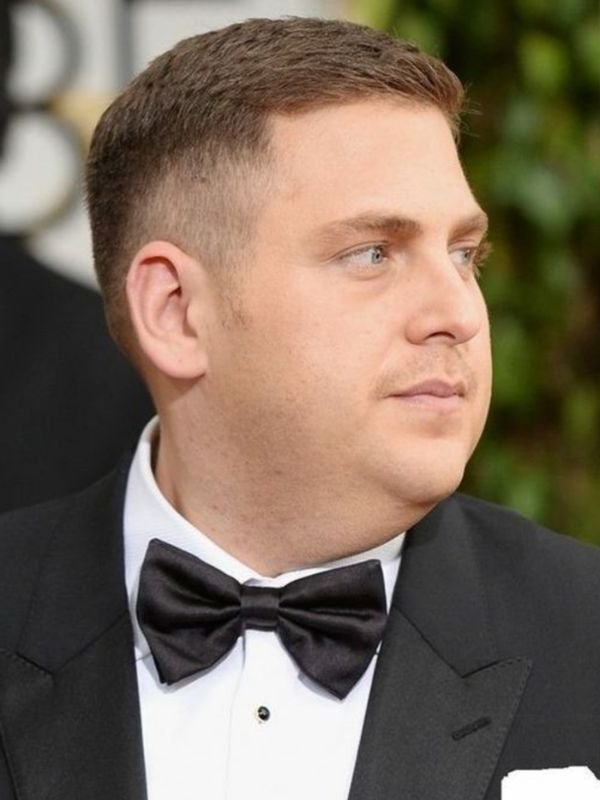
Round faces benefit from styles that add height and angles. Think textured tops or a quiff that draws the eye upward.
Avoid anything that adds width at the sides, since it emphasizes roundness rather than softening it. Fades work well here because they slim down the sides visually.
A side part also helps break up the roundness with a strong diagonal line across the top.
Square Faces
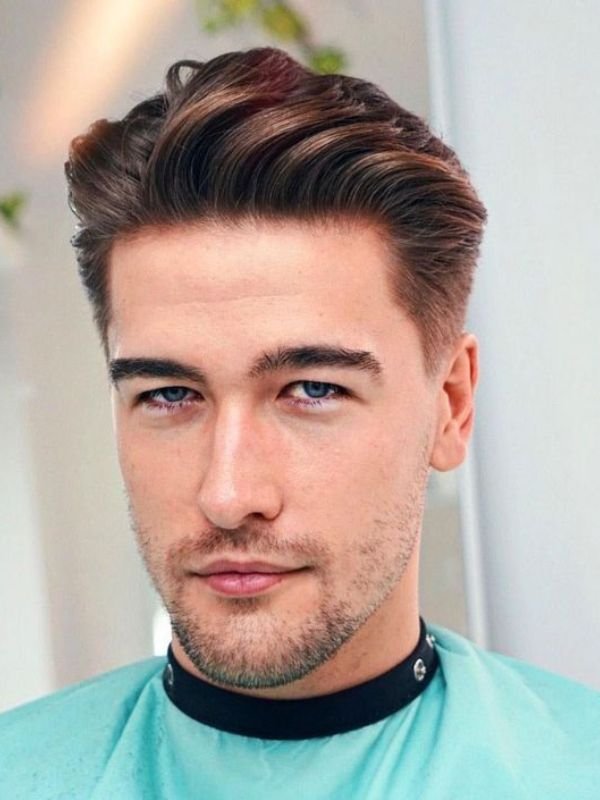
Square faces have strong jawlines, and most haircuts look good simply because there’s already solid facial structure to work with. Textured crops and pompadours both suit this shape well.
Softer, textured styles balance out sharp angles nicely without hiding them completely. You want to work with the jawline, not against it.
Avoid overly geometric cuts that mirror the squareness too closely, since that can look a bit harsh.
Long/Rectangular Faces
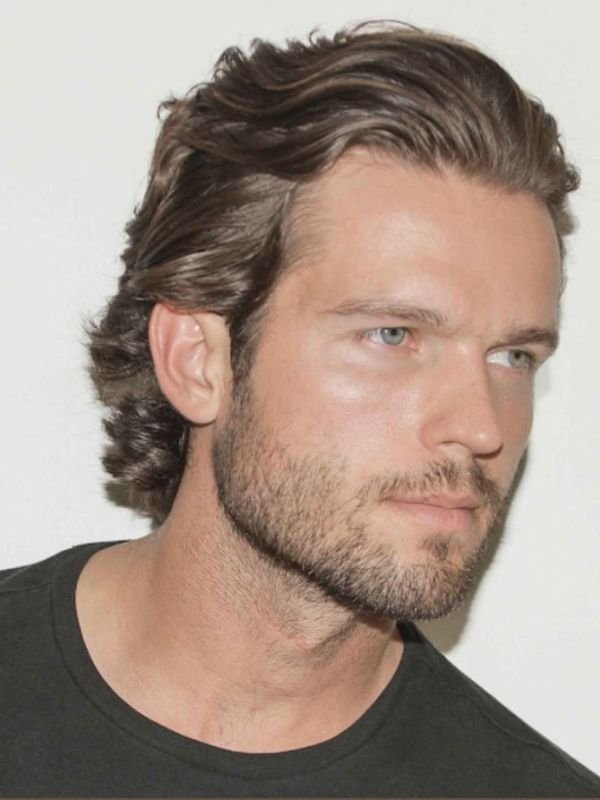
Longer faces benefit from added width rather than height. Styles like a classic side part or fringe help shorten the visual length of the face.
Avoid tall styles like pompadours or quiffs, since they stretch an already long face even further. A fringe brought down over the forehead is particularly effective here.
Keeping some volume at the sides also helps create a more balanced hairstyle overall.
Hair Texture Considerations
Your natural hair texture decides which styles will actually cooperate with you daily. Fighting your texture just leads to frustration and wasted product.
Understanding whether you’ve got straight hair men styles suit, or something curlier, saves serious time at the mirror each morning. It also helps your barber cut with the grain instead of against it.
Texture and hair density together determine how much product and effort a given style will realistically need.
Straight Hair
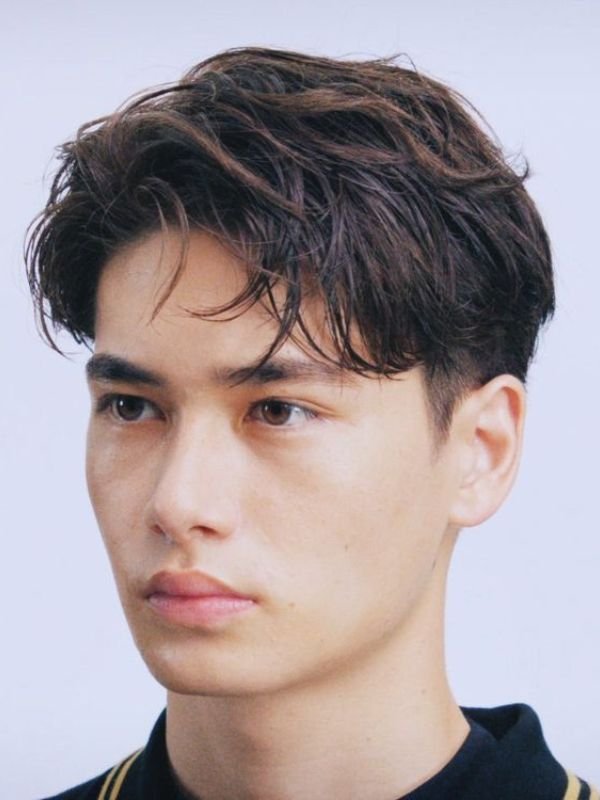
Straight hair men deal with tends to hold sleek styles like slick backs and side parts really well. There’s minimal frizz to fight against.
The tradeoff is that straight hair can look flat without some added texture or volume. A sea salt spray or light mousse helps counter that flatness.
Straight hair also shows every cutting mistake clearly, so precision matters even more at the barbershop.
Wavy Hair
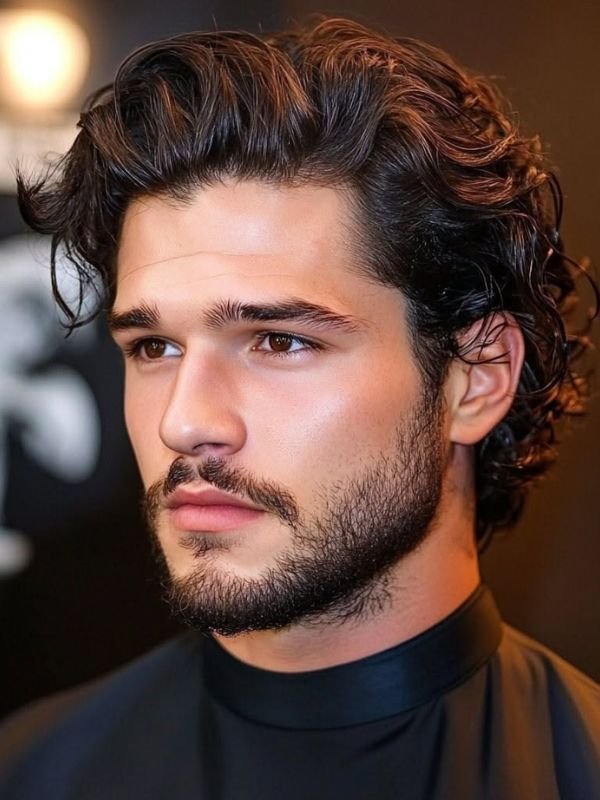
Wavy hairstyles men wear tend to have natural texture built right in, which makes styling faster overall. A bit of sea salt spray enhances waves without much extra effort.
Medium lengths suit wavy hair particularly well since there’s enough weight to define the wave pattern clearly. Too short, and the waves barely show up at all.
Avoid heavy products that weigh down natural wave and flatten out the texture you’re trying to highlight.
Curly Hair
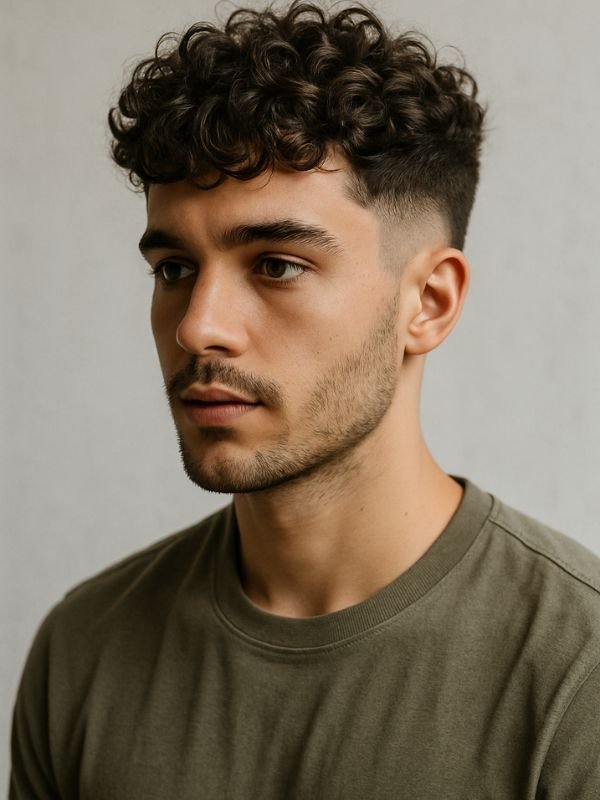
Curly hairstyles men rock require a bit more care, mainly around moisture and frizz control. A good leave-in conditioner becomes essential here, not optional.
Curly hair tends to shrink up when it dries, so always account for that when discussing length with your barber. What looks short wet often looks shorter once fully dry.
Medium to long lengths usually let curls show their full shape and bounce, rather than getting cut too short and looking tight or frizzy.
Coarse/Thick Hair
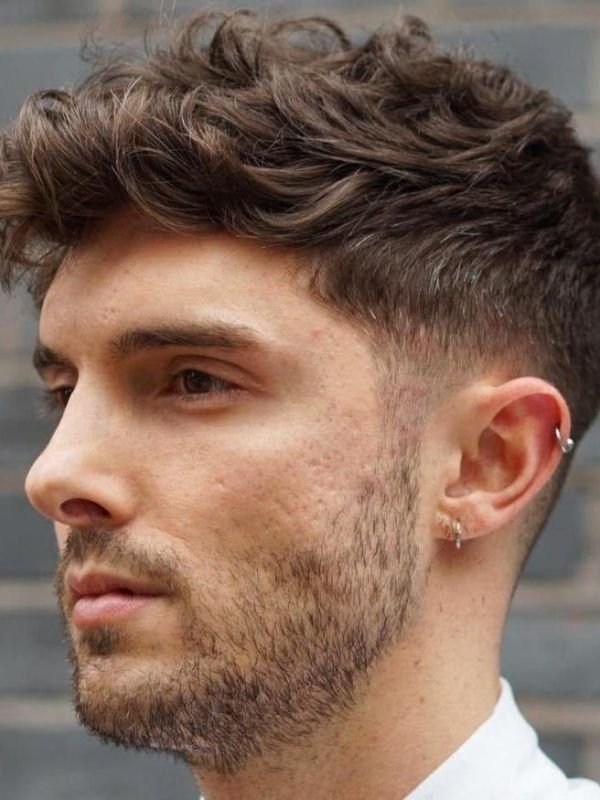
Coarse hair and thick hair hairstyles benefit hugely from layering to remove bulk and weight. Without it, hair can look like a solid block instead of styled shape.
Barbers often use thinning shears here to reduce volume without sacrificing overall length. This keeps thick hair manageable without losing the fullness that makes it distinctive.
A lightweight matte clay works better than heavy pomades, which can make already dense hair feel greasy and weighed down.
Hairstyles for Men with Straight Hair
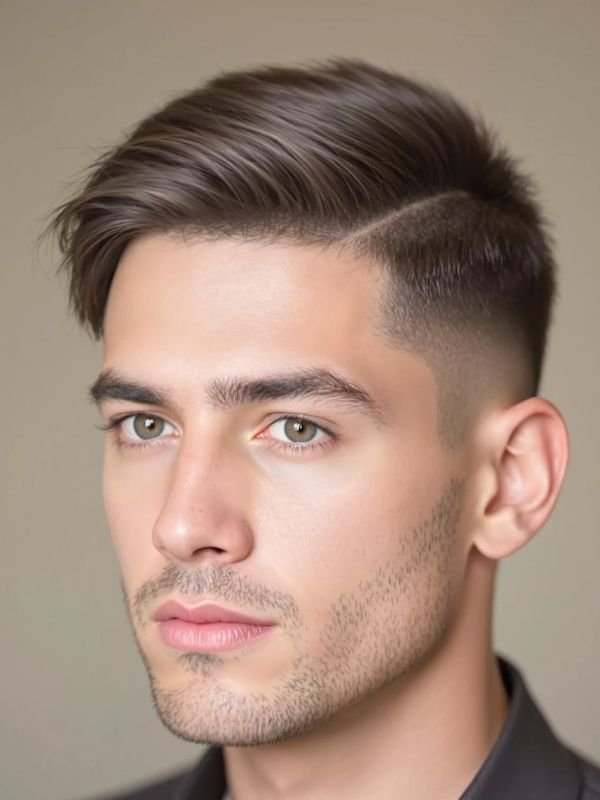
Straight hair pairs beautifully with crisp, defined styles since there’s no natural texture fighting the shape. Side parts, slick backs, and clean fades all look sharp on straight strands.
If you want more texture, a light texturizing spray before blow drying adds grit without needing curl or wave. It’s a small trick that makes a big visual difference.
Straight haired guys also transition between lengths more predictably, since there’s less shrinkage or unexpected curl pattern to account for.
Choosing the Right Hairstyle by Hair Length
Picking the right length isn’t just about looks, it’s about matching hair to how you actually live. Your daily routine matters just as much as your face shape.
Think honestly about how much time you’re willing to spend each morning. That answer narrows your options fast.
Best Hair Length for Different Lifestyles
Active guys who hit the gym daily usually do better with shorter lengths that handle sweat and quick showers without a full restyle. Short hair just bounces back faster.
Creative or corporate professionals often lean toward medium lengths, which balance a professional look with enough personality to stand out. It’s the middle ground that works in most rooms.
If your schedule allows for real styling commitment, longer hair can become a signature look worth the extra time investment.
Growing from Short to Medium Hair
The growing out phase trips up a lot of guys. Hair looks awkward for weeks before it settles into something workable.
Regular trims during this stretch, even small ones, help maintain shape while length builds underneath. Skipping trims entirely usually makes the awkward phase last even longer.
Talk to your barber about a growing out plan instead of avoiding the chair altogether. A little shaping goes a long way during transition periods.
Hair Length Guide for Men
Think of this whole guide as your reference point whenever you’re due for a change. Hair length isn’t permanent, and neither is your style.
Revisit your choice every few months as seasons, jobs, or just personal taste shift. What worked last year might not fit where you are now.
Hair Length Maintenance Tips
Regular trims are non negotiable no matter your length. Even long hair needs a barber visit every couple months to stay healthy and shaped.
Split ends creep up faster than most guys expect, especially past the medium length range. Catching them early with small trims saves you from a bigger cut later.
Build a simple daily hair routine, even if it’s just a quick comb and a dab of product. Consistency keeps any length looking intentional rather than neglected.
The Professional Perspective
Barbers see thousands of heads a year, and their input is worth more than any online guide, including this one. A real barber consultation catches details a mirror simply can’t.
Bring reference photos, but stay open to adjustments. What works on someone else’s hair type might need tweaking for yours specifically.
Building a relationship with one barber over time also means better cuts. They learn your hair’s quirks and adjust their approach with every visit.
Making Your Length Decision
At the end of the day, the best length is the one you’ll actually maintain. A stunning style that gets neglected looks worse than a simple cut kept sharp.
Weigh your lifestyle, your face shape, your hair texture, and your patience for upkeep. All four factors matter more than trends do.
Once you’ve settled on a direction, commit to it for a few months before judging the results. Hair needs time to reveal its full potential at any length.
Common Mistakes Men Make When Choosing Hair Length
Copying a celebrity’s exact cut without accounting for texture differences is probably the most common misstep. Their hair type rarely matches yours.
Another big one is skipping regular trims while growing hair out, which leads to a shapeless, patchy transition phase. Patience without maintenance backfires every time.
Guys also underestimate how much daily time a style demands before committing. A quiff that needs fifteen minutes each morning isn’t realistic for everyone’s schedule.
Seasonal Considerations for Hair Length
Summer heat pushes a lot of guys toward shorter lengths simply for comfort. Less hair means less sweat trapped against your scalp.
Winter, on the other hand, gives longer styles a practical edge since extra hair adds a bit of natural warmth. It’s a small but real factor worth considering.
Humidity also affects curly and wavy hair differently across seasons, so don’t be surprised if your usual style behaves differently in July versus January.
Frequently Asked Questions
What’s the best hair length for a receding hairline?
Shorter lengths, especially buzz cuts or crew cuts, tend to draw less attention to a receding hairline. Length up top only highlights the contrast further.
How often should I get a haircut based on my length?
Short hair needs trims every two to three weeks, medium every four to six, and long hair every eight to twelve weeks to stay healthy.
Can I switch from long to short hair easily?
Yes, cutting long hair short is quick and immediate. Going the other direction from short to long takes months of patience instead.
Does hair texture change with length?
Somewhat. Waves and curls often become more defined as length increases, since there’s more weight to pull the pattern into shape.
What products work best for medium length hair?
A combination of pomade for hold and a light hair oil for shine usually covers most medium length styling needs.
Conclusion
Your hair length says a lot before you even open your mouth. Getting it right means matching length, texture, face shape, and lifestyle together.
There’s no single best answer here, only what fits you specifically. Use this guide as a starting point, then let your barber fine tune the details.
Whatever length you land on, keep up with trims and a simple routine. That’s honestly what separates a good haircut from a great one.