
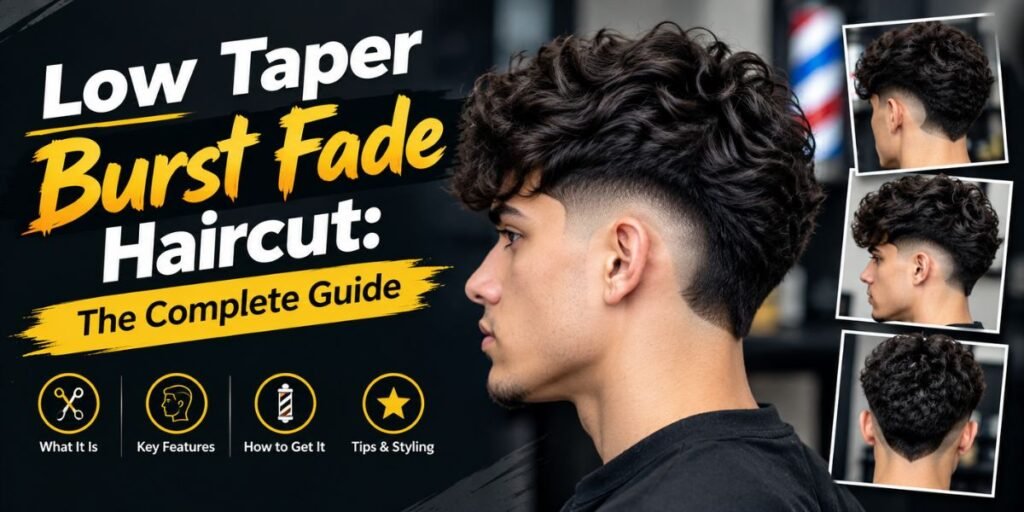
If you want a fade that looks sharp without looking like you tried too hard, the low taper burst fade is one of the smartest cuts you can ask for right now. It keeps things close and clean near the ears and neckline, then adds a curved burst detail that gives the whole cut a bit of personality instead of a flat, straight line.
This guide breaks down exactly what the cut is, who it suits, how to describe it to your barber, and what it takes to keep it sharp between visits. No fluff, just what you actually need to know before you sit in the chair.
What A Taper Low Burst Fade Is
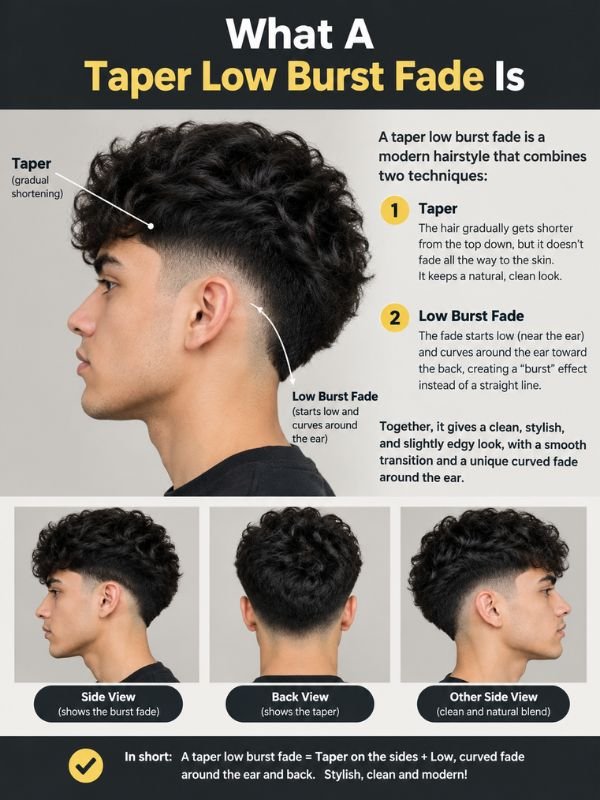
A taper low burst fade combines two techniques into one cohesive haircut. The taper handles the sides and neckline, trimming hair down gradually instead of shaving it to the skin. The burst adds a curved, half moon shaped fade that wraps around the ear rather than running in a straight vertical line.
Put those together and you get a cut that stays close and neat near the ears, but reads as more detailed and rounded than a standard fade. It works from the front as a clean, low key style. From the side, the curved burst line gives it a shape that a plain taper simply doesn’t have.
Most barbers can execute this cut on almost any hair type, which is part of why it has stayed popular through 2026.
Taper Vs Low Fade Vs Burst Fade
These three terms get mixed up constantly, and that confusion is exactly why so many guys walk out of the barbershop with the wrong cut. Here’s a quick breakdown of how they actually differ.
| Cut Type | Where It Starts | Finish | Best For |
| Taper | Around the sideburns and nape | Gradual, never shaved to skin | Professional or low maintenance looks |
| Low Fade | Just above the ears | Can go down to skin | Guys who want more contrast |
| Burst Fade | Curves around the ear | Half moon shape, tight at the ear | Adding shape without going too bold |
Taper
A taper is the softest of the three. Instead of blending hair down to bare skin, it trims hair shorter around the neckline and sideburns while keeping length everywhere else consistent. It’s the go to choice for guys who want a clean look that doesn’t scream “fresh haircut.”
Low Fade
A low fade starts just above the ears and can fade all the way to skin near the hairline. It gives more visible contrast than a taper but still sits low enough on the head to look subtle compared to a mid or high fade.
Burst Fade
A burst fade is defined by its curve. Rather than a straight line down the side of the head, the fade arcs around the ear in a rounded shape, tightest right at the ear and fanning outward from there. That detail is what makes a burst fade instantly recognizable next to a standard fade.
Low taper burst fade curly hair
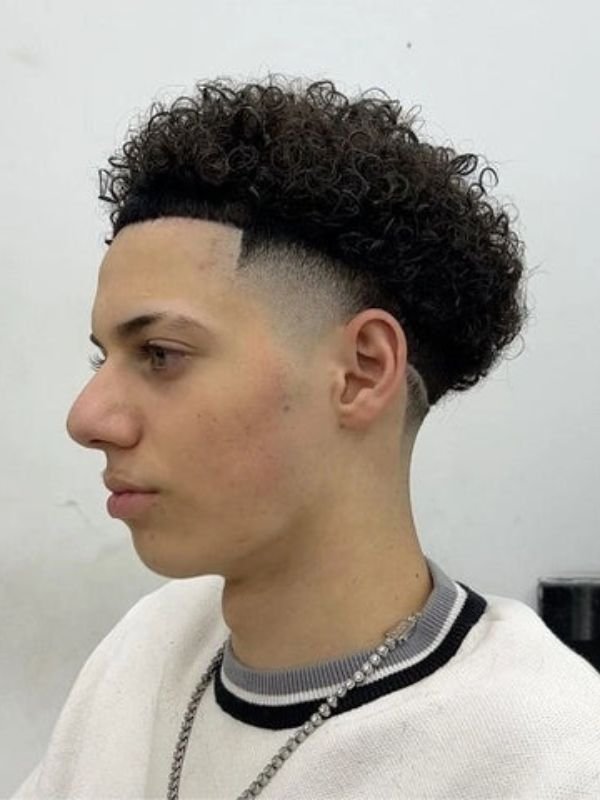
Curly hair actually pairs really well with this cut. The curl pattern on top creates natural volume and texture, while the low taper and burst detail keep the sides controlled and neat. The contrast between textured curls up top and a clean curved line around the ear is part of what makes this version so popular.
To keep curls defined, ask your barber to cut with the natural curl pattern rather than against it. A lightweight curl cream or leave in conditioner will help maintain shape and prevent frizz between wash days.
Low Taper Burst Fade black men
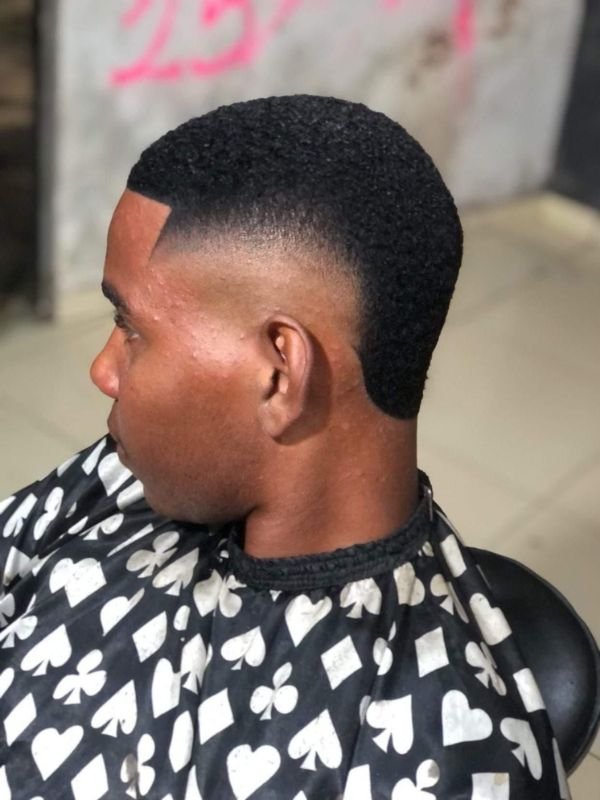
This variation is one of the most requested versions of the cut, and for good reason. It works exceptionally well with coily and kinky hair textures, and it pairs naturally with fades, waves, and twists on top. The low taper keeps the sides close without shaving too aggressively, while the burst around the ear adds definition that shows up clearly against darker hair.
Many barbers who specialize in this cut recommend pairing it with a line up along the front hairline for an even sharper finish. It photographs well and holds its shape for a solid two to three weeks with basic upkeep.
Also Read This: 16 Guard Buzz Cut Guide: The Clean, Natural Longer Look
Low taper Burst fade mullet
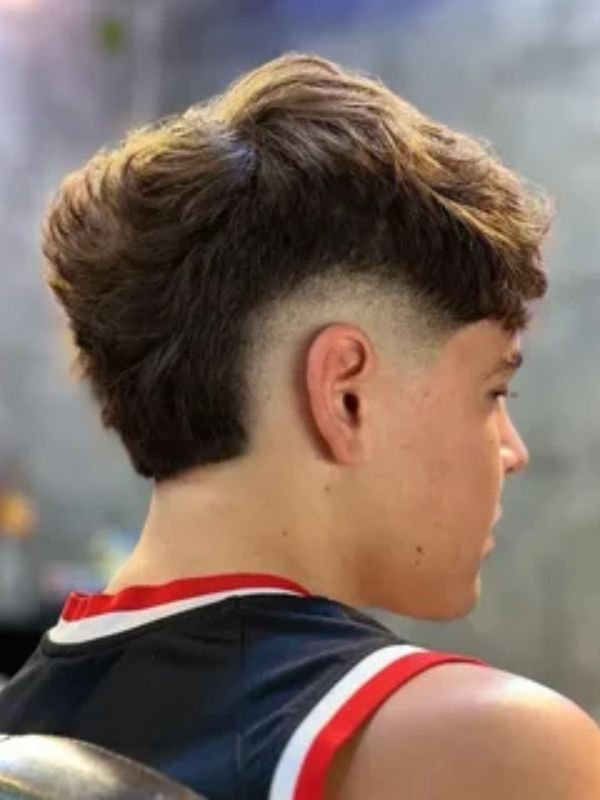
Pairing a mullet with a low taper burst fade gives you the best of both trends. The sides and back stay tight and controlled thanks to the taper and burst detail, while length is preserved at the back for that signature mullet flow.
This combination needs slightly more maintenance than a standard burst fade because you’re managing two different textures and lengths at once. Regular trims on the sides will keep the fade sharp while the back continues to grow out.
High taper burst fade
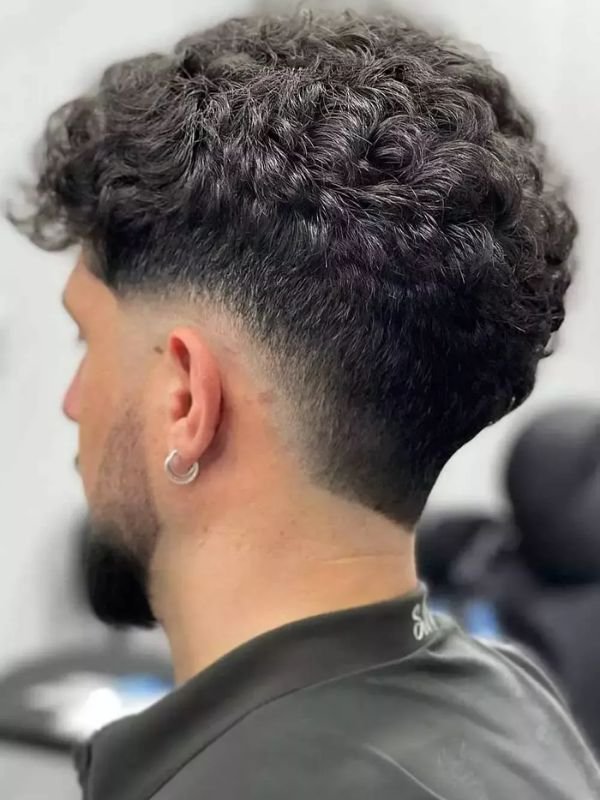
Not every version of this cut has to stay low. A high taper burst fade moves the starting point of the fade further up the head, closer to the temple, which creates a bolder, more dramatic contrast between the top and sides.
If you want something louder and more attention grabbing than the low version, this is the direction to go. It still keeps the curved burst detail around the ear, just positioned higher and with more visible skin showing through.
Who A Taper Low Burst Fade Suits
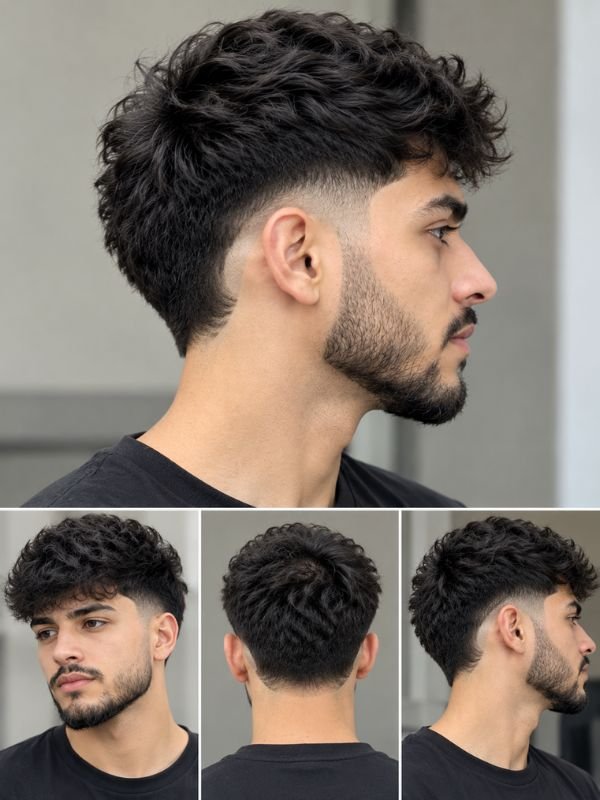
This cut is genuinely one of the more flexible options out there. It doesn’t demand a specific face shape, hair density, or texture to look good, which is a big part of why it keeps trending.
Face Shapes
- Oval faces: Nearly any variation works well here, since the balanced proportions give a lot of styling freedom.
- Square faces: A slightly higher burst helps soften strong jawlines.
- Round faces: Keeping more length on top adds vertical lines that balance out the roundness.
- Diamond faces: The curved burst detail complements angular cheekbones nicely.
Hair Types
- Straight hair holds a crisp, defined burst line with minimal effort.
- Curly hair adds natural texture contrast against the clean sides.
- Coily and kinky hair works beautifully with waves, twists, or a short afro on top.
- Wavy hair blends easily and needs the least daily styling.
Best Styles To Ask For
If you’re not sure exactly how to wear this cut, these variations are consistently the most requested at barbershops right now:
- Low taper burst fade with a textured crop on top
- Low taper burst fade with curls left natural
- Low taper burst fade with a fringe for a softer look
- Low taper burst fade with a hard part or line up
- Low taper burst fade paired with a short beard
- Low taper burst fade mullet for extra length at the back
How To Ask Your Barber For It
Vague instructions almost always lead to a different haircut than the one you had in mind. Barbers move fast and see a lot of clients, so being specific about the curve, the height, and the length on top saves everyone time and avoids that awkward “that’s not quite it” moment.
A Script That Works
Try saying something like this at the chair: “I’d like a low taper fade that curves around my ear in a burst shape, not a straight line. Keep the fade close to my neckline and ears, and leave [your preferred length] on top.” Swap in “textured,” “curly,” or “a bit longer for a fringe” depending on the look you’re after.
What To Show
Bring reference photos from multiple angles, not just the front. Side and back angle shots matter just as much because the burst detail is genuinely hard to judge head on. Also mention your natural hair type, since curly and straight hair are cut differently to achieve the same curved shape.
Keeping A Taper Low Burst Fade Sharp
The curved shape of a burst fade is precise, which means it’s also the first detail to blur as your hair grows back in. A short, consistent maintenance routine will keep the cut looking intentional instead of overgrown.
Touch-Up Timeline
| Time Since Cut | What To Do |
| Week 1 | Enjoy the sharpest version of the cut, minimal upkeep needed |
| Week 2 | Light trimmer touch up around the neckline if needed |
| Week 3 | Clean up sideburns and the burst curve as it starts to soften |
| Week 4 | Book a full barber appointment to refresh the fade |
Neckline And Sideburn Cleanup
Between full barber visits, a light trimmer touch up can extend the sharp look. Use a close guard on the neckline and follow your natural hairline rather than cutting a harsh straight edge. Trim sideburns in small increments since it’s easy to take off too much at once, and uneven sideburns will throw off the entire cut.
Mistakes That Ruin The Cut
Most problems with this haircut happen at the barber’s chair, not at home, but a few things can undo a great cut quickly:
- Letting the fade grow out too long before a touch up, which blurs the burst curve
- Using vague language with your barber instead of describing the curve specifically
- Skipping reference photos from the side and back angle
- Over trimming sideburns at home in an attempt to keep them even
- Applying too much product, which weighs down texture on top
Also Read This: 38 Best Burst Fade Haircuts for Men (2026 Style Guide)
Styling It At Home
Daily styling depends heavily on what you’re wearing on top. For textured crops, a small amount of matte clay or texture paste rubbed between the palms and worked through damp hair gives natural looking definition without shine.
For curly or coily textures, a lightweight curl cream or leave in conditioner keeps curls defined while controlling frizz. If you’re wearing a fringe, a light pomade helps hold the shape forward without looking greasy.
Whatever product you choose, apply it sparingly. This cut works best when the top looks naturally textured rather than heavily styled.
Taper Low Burst Fade Vs Blowout Taper
These two cuts often get compared because both keep a softer, less aggressive finish on the sides compared to a skin fade. Here’s how they actually differ.
| Feature | Taper Low Burst Fade | Blowout Taper |
| Side Fade | Curved, half moon shape around the ear | Straight taper, no curve |
| Contrast | Moderate, blends closely to skin near the ear | Softer, hair left longer overall |
| Best For | Guys who want a defined, detailed shape | Guys who want a rounder, fuller silhouette |
| Maintenance | Every 2 to 3 weeks | Every 3 to 4 weeks |
Is It Okay For School, Work, Or Formal Settings?

Yes, and this is actually one of the biggest advantages of the low version specifically. Because the fade stays low and close to the hairline rather than climbing high up the head, it reads as clean and professional rather than trendy or flashy.
It’s a solid choice for school dress codes, office environments, and formal events, especially when paired with a shorter length on top and a neat line up. If you’re worried about looking too casual, ask your barber to keep the burst curve subtle rather than sharply defined.
Final Thoughts
The taper low burst fade earns its popularity honestly. It works across nearly every hair type and face shape, it’s low maintenance compared to more intricate designs, and the curved burst detail gives it just enough personality to stand out without being loud.
Whether you pair it with curls, a mullet, a fringe, or keep it simple with a textured crop, the core technique stays the same. Bring clear reference photos, describe the curve specifically, and communicate your hair type, and you’ll walk out with a cut that actually matches what you had in mind.
FAQs
What is a low taper burst fade?
It’s a haircut that combines a low taper on the sides and neckline with a curved, half moon shaped burst fade around the ear.
How often do I need a touch up?
Most people need a full refresh every two to three weeks to keep the curved line sharp.
Does a burst fade work with curly hair?
Yes, curly hair pairs especially well since the texture on top contrasts nicely with the clean, curved sides.
Is a low taper burst fade appropriate for work or school?
Yes, the low placement keeps it subtle and professional compared to mid or high fade versions.
What’s the difference between a burst fade and a drop fade?
A burst fade curves around the ear into the neck, while a drop fade arches lower behind the ear for a more natural slope.
Can I maintain the cut at home between barber visits?
Yes, a light trimmer touch up on the neckline and sideburns can extend the sharp look for a week or two.
Does this cut suit every face shape?
It works well across most face shapes, with small adjustments like fade height helping to complement stronger jawlines or rounder faces.