
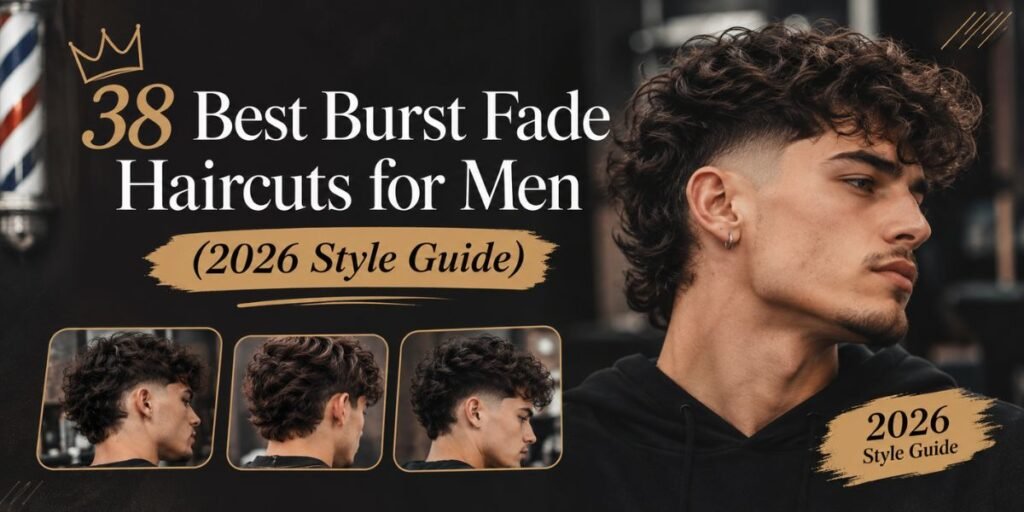
Want a haircut that looks sharp without trying too hard? A burst fade haircut might be exactly what you’re after.
It’s clean around the ears, it frames whatever you’ve got going on top, and it works whether you’re headed to the office or out with friends.
This guide walks you through every burst fade style worth knowing in 2026, how to pick the right one for your face and hair, and exactly what to say when you sit in the barber’s chair.
What Is a Burst Fade Haircut?
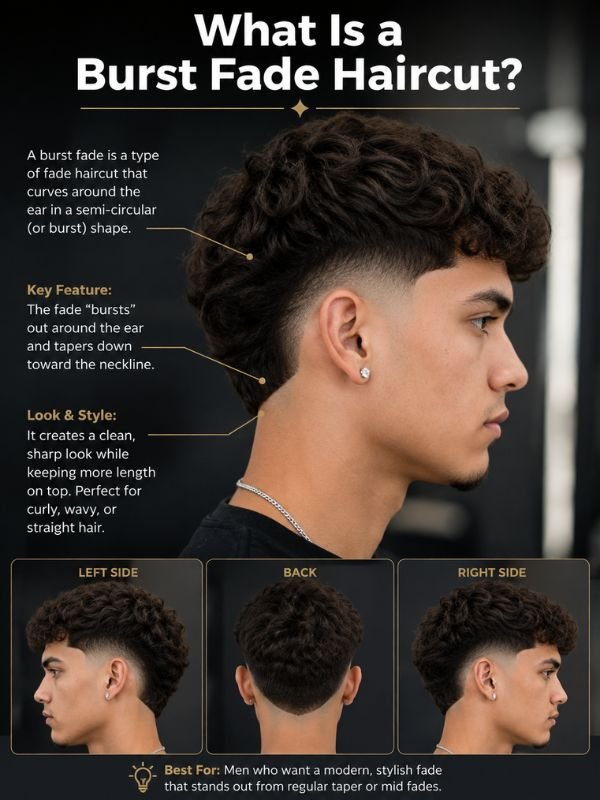
A burst fade haircut is a fade that curves around the ear instead of running in a straight line across the back and sides.
Picture a semicircle hugging your ear, fading from skin to hair in one smooth sweep. That’s the burst fade arc, and it’s what gives this cut its name.
Unlike a standard fade that travels evenly across the whole head, a burst fade around the ear stays contained to that one area. It keeps length everywhere else, which is why it pairs so well with mohawks, mullets, and longer top styles.
Barbers love it because it’s flexible. You can go subtle or dramatic, and it still reads as intentional either way.
Burst Fade vs. Drop Fade vs. Taper Fade (Key Differences)
People mix these up constantly, so let’s clear it up.
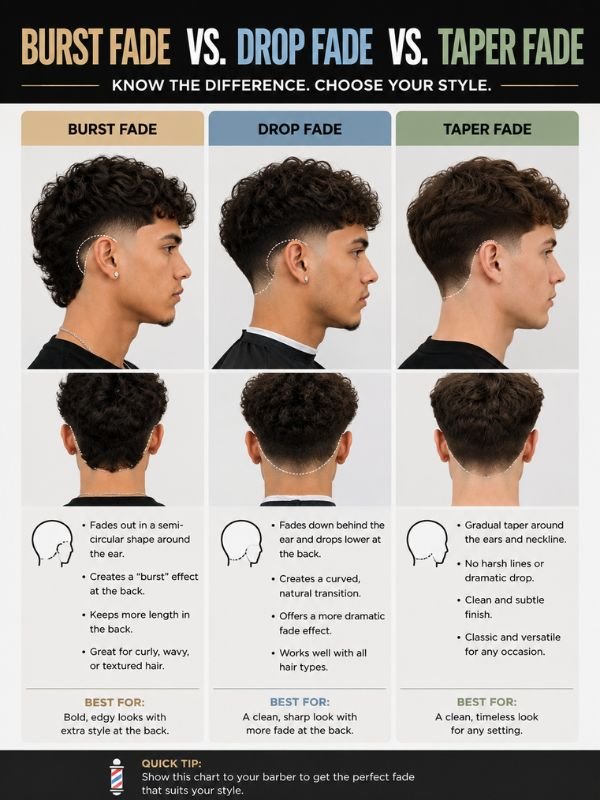
A drop fade curves down behind the ear and continues into the nape, following the shape of your skull. A taper fade stays tighter and closer to the head, usually without much skin showing. A burst fade does its own thing entirely, it circles the ear in a tight arc and doesn’t extend far into the back.
Think of it this way. If a drop fade is a gentle slope, a burst fade is a burst of energy right at the ear, hence the name.
Knowing this difference matters when you’re talking to your barber. Say “taper” when you mean burst, and you might walk out with something totally different.
What Are the Key Burst Fade Heights?
Fade height changes the whole personality of the cut. It’s the difference between a haircut you can wear to a wedding and one that turns heads at a concert.
Here’s a quick breakdown of where the fade height typically starts on each version.
- Low burst fade: starts just above the ear
- Mid burst fade: starts around temple level
- High burst fade: starts higher, closer to the crown
Low Burst Fade (Subtle & Professional)
A low burst fade keeps most of your hair intact, with the fade starting low and staying tight to the skin near the ear only.
It’s the safest option if you work somewhere formal or you’re just not ready to go bold. The fade transition is short and subtle, so from a distance it barely reads as a fade at all.
Guys who want a low maintenance look between trims tend to gravitate here. It grows out gracefully instead of looking messy after two weeks.
Mid Burst Fade (Balanced & Everyday)
The mid burst fade sits right in the middle, and honestly, it’s the most requested version for a reason.
It shows enough skin to look fresh and defined, but it’s not so aggressive that it screams for attention. This is your everyday, goes-with-anything burst fade haircut.
It also blends nicely with hair volume on top, since the mid height gives your stylist room to build texture without the sides looking overwhelmed.
High Burst Fade (Bold & High Contrast)
A high burst fade climbs up near the crown, creating serious contrast between the skin and the hair above it.
This is the version you pick when you want people to notice. It pairs especially well with hair design work, mohawks, and anything with sharp texture on top.
Just know it needs more upkeep. A high fade grows out faster visually than a low one, so you’ll be back in the chair sooner to keep those lines sharp.
38 Best Burst Fade Haircut Styles for Men
Now for the main event. Here are 38 ways to wear a burst fade in 2026, from the classic version to the styles that push it further.
1. Classic Burst Fade
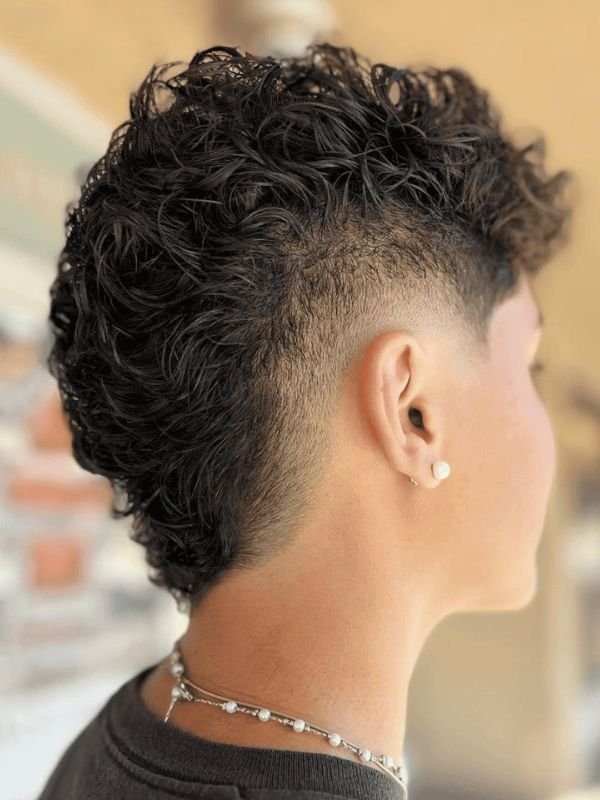
This is the original, the classic burst fade with a clean semicircle around the ear and short, textured hair on top.
It’s simple, it’s sharp, and it never really goes out of style. If you’re new to burst fades, start here before experimenting with anything fancier.
2. Burst Fade Mullet
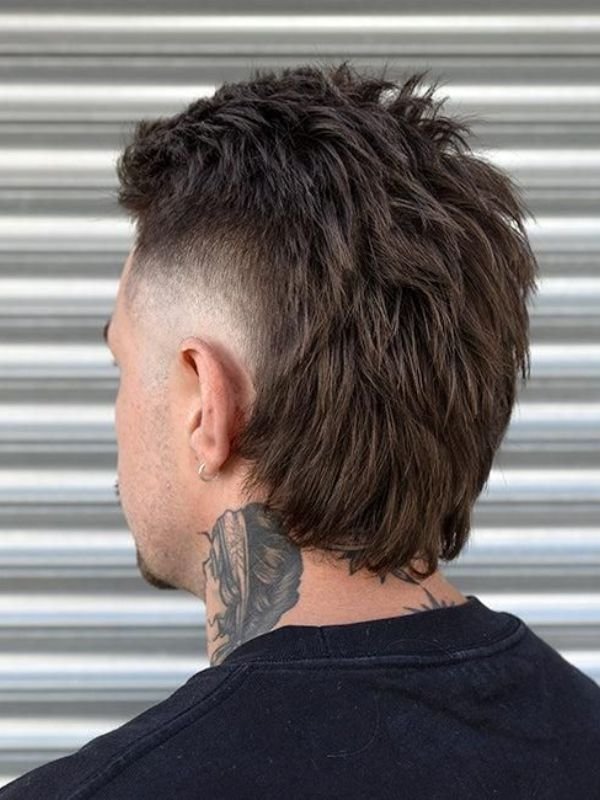
The burst fade mullet takes the business up front, party in the back idea and gives it a 2026 update.
Short and faded on the sides with the burst fade back kept clean, while length stays long and loose behind. It’s bold, but it’s also having a real moment right now.
3. Modern Burst Fade Mohawk
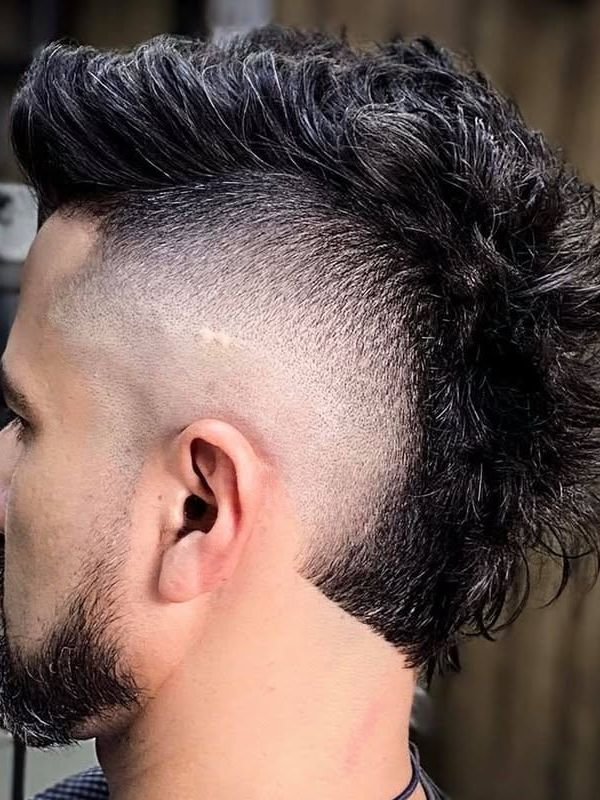
A burst fade mohawk uses the arc around the ear to sharpen the contrast between the shaved sides and the strip of longer hair down the middle.
It’s not just for skaters anymore. Styled with a bit of product, this cut looks polished enough for everyday wear while still feeling edgy.
4. Burst Fade Edgar Cut
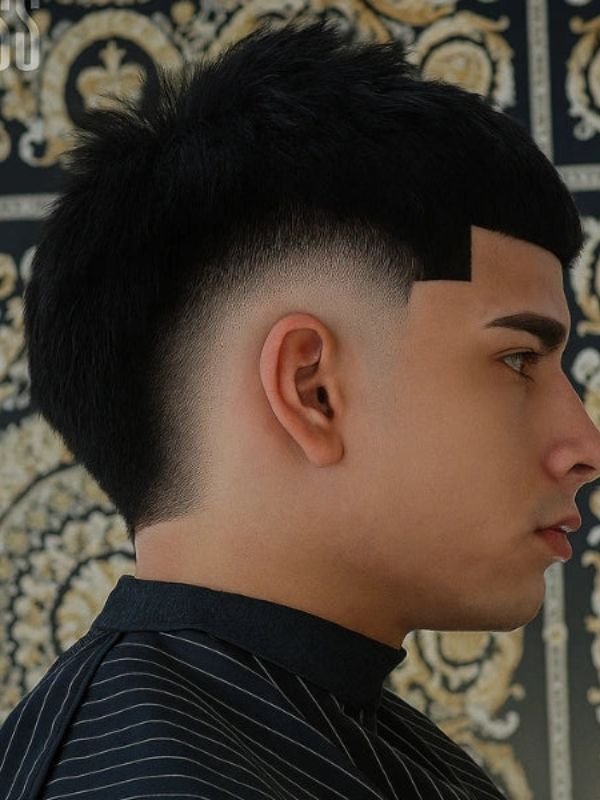
The Edgar cut brings a blunt, straight fringe across the forehead, and a burst fade around the ears sharpens the whole silhouette.
It’s become massively popular with younger guys because it’s low effort to style but still looks deliberate. The blunt line up top does most of the work.
5. Burst Fade Textured Crop
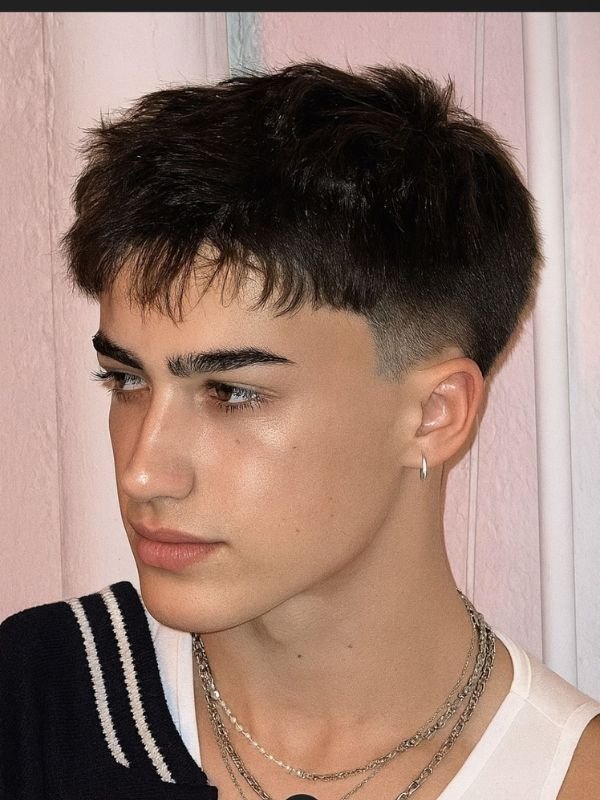
A burst fade textured crop keeps the top choppy and piecey, almost like it’s been finger styled out of bed, while the sides stay crisp and faded.
It’s a great pick if your hair has some natural texture already. You’re basically working with what you’ve got instead of fighting it.
6. Burst Fade French Crop
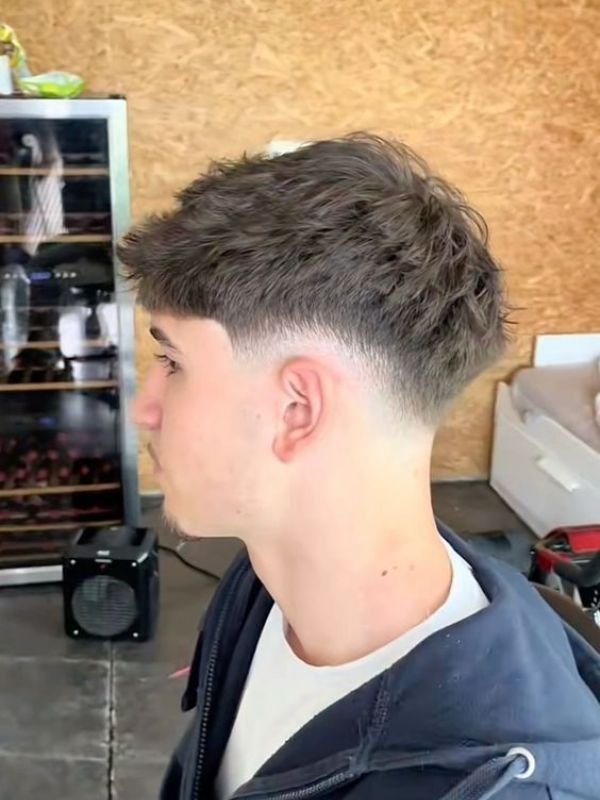
The burst fade French crop pairs a short, textured fringe with a tight burst fade for a look that’s clean but still has personality.
This one reads a little more grown up. It’s a favorite for guys who want something sharp for work that still has an edge after hours.
7. Burst Fade Faux Hawk
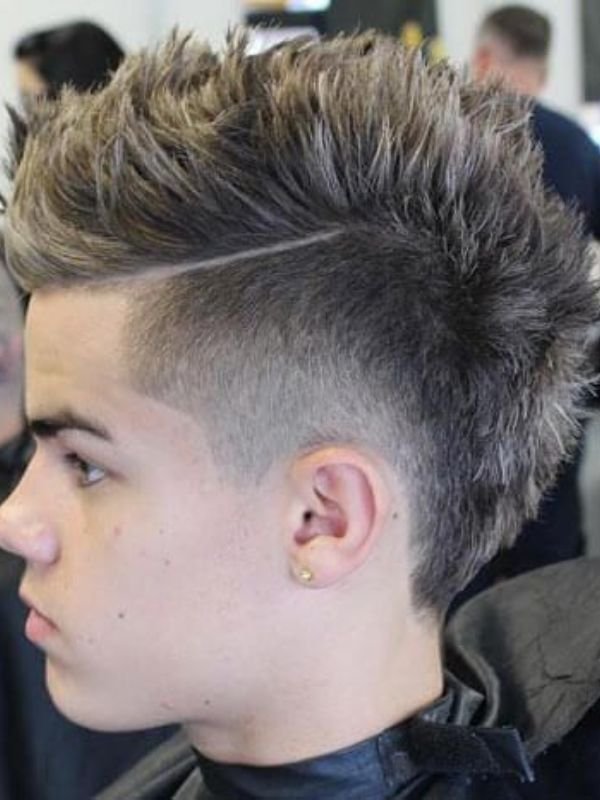
A burst fade faux hawk softens the mohawk idea. Instead of shaving the sides completely, you get a faded burst that tapers up into a raised strip on top.
It’s more wearable day to day than a true mohawk, and the fade keeps it from looking dated.
8. Burst Fade Pompadour
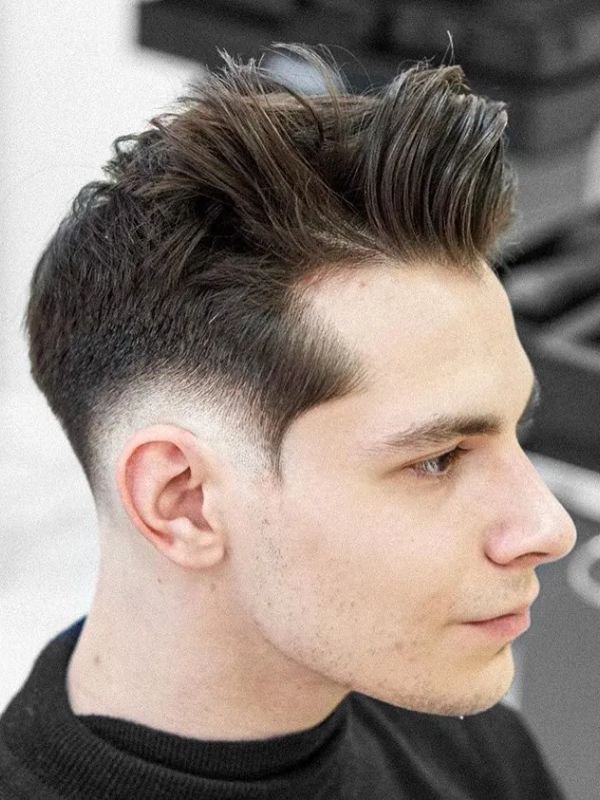
Volume lovers, this one’s for you. The burst fade pompadour keeps serious height and sweep on top while the burst fade sides stay disciplined and neat.
It’s a sharp contrast, big and bold up top, clean and controlled down low. That balance is what makes it work.
9. Burst Fade Quiff
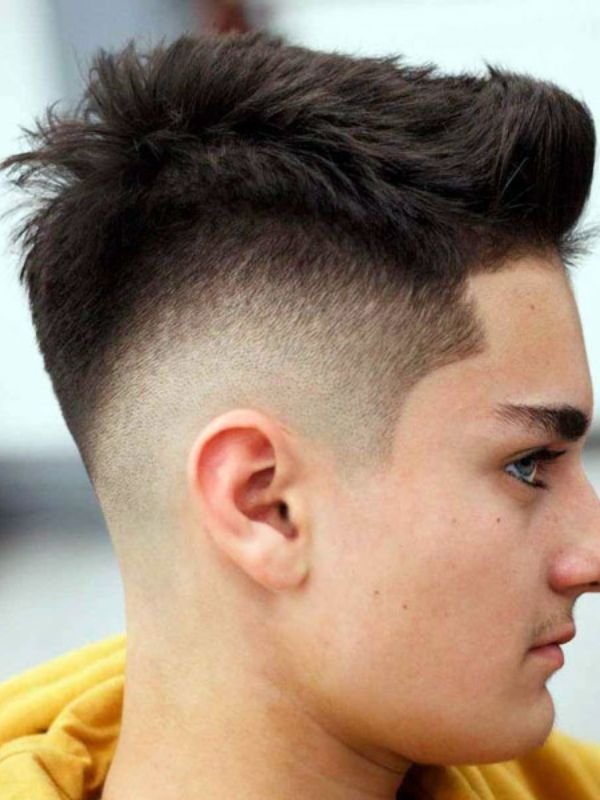
The burst fade quiff is the pompadour’s more relaxed cousin. Less height, less structure, but the same swept back energy.
It’s easier to style on a busy morning, honestly just a bit of product and a comb through gets you there.
10. Burst Fade V-Cut
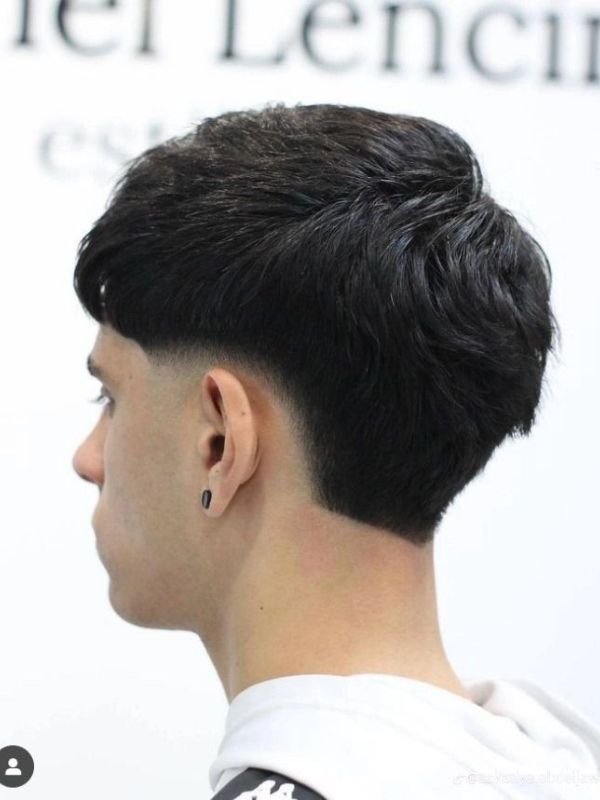
A burst fade V-cut shapes the nape into a distinct V instead of a rounded or straight line, adding a bit of drama to the back.
It’s a small detail, but it changes how the whole cut reads from behind. Worth asking your barber about if you want something a little different.
11. Burst Fade Comb Over
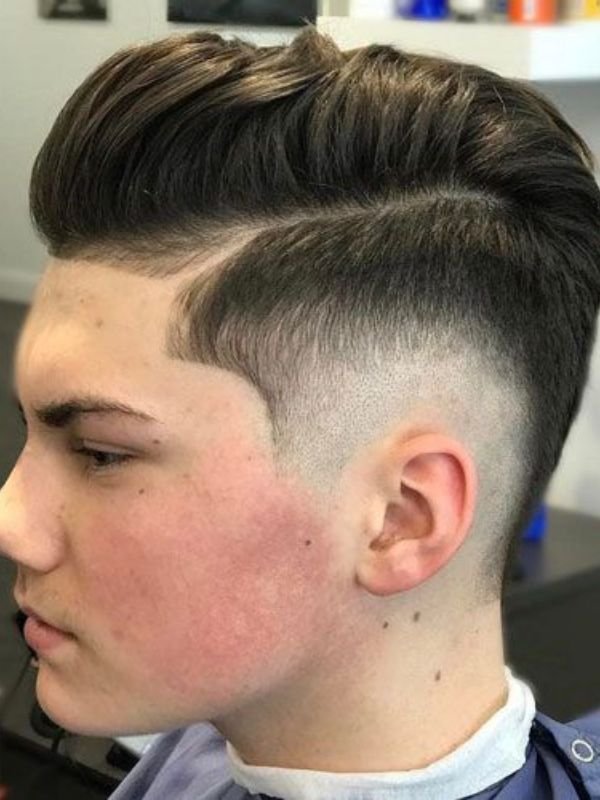
The burst fade comb over is timeless for a reason. Length on top gets combed to one side, and the burst fade underneath keeps it grounded and neat.
It works for basically every hair type and it’s easy to maintain between trims.
12. Burst Fade Slick Back
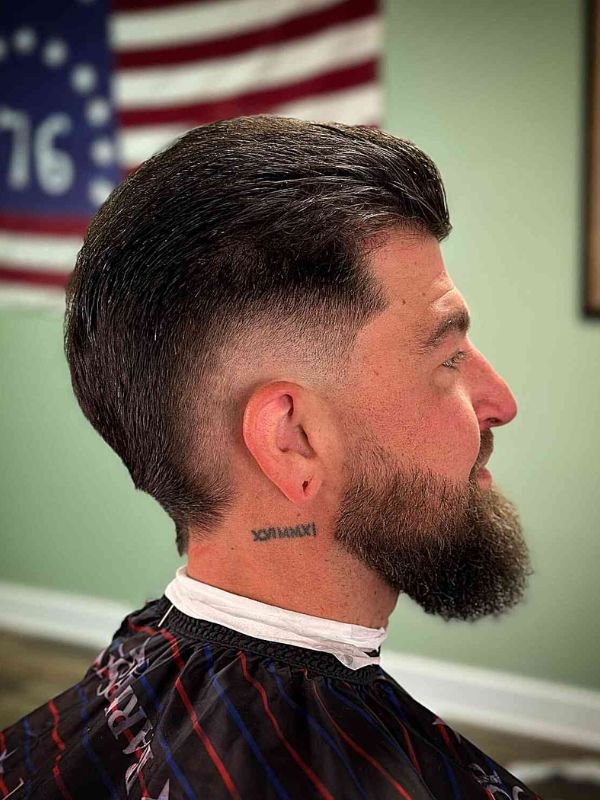
Slicked straight back with a shine, the burst fade slick back is a look that photographs incredibly well.
It needs a strong hold product to stay put, but paired with a tight burst fade, it looks sharp enough for a night out or a big meeting.
13. Burst Fade Buzz Cut
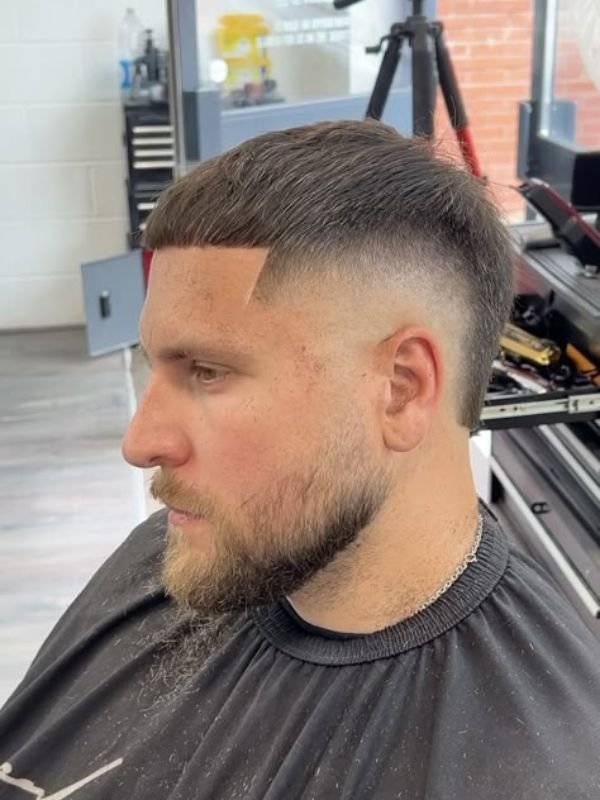
Short on top, short on the sides, but that curved burst fade line still adds detail to an otherwise minimal cut.
It’s the lowest maintenance option on this whole list. If you barely want to think about your hair, this is it.
14. Burst Fade Crew Cut
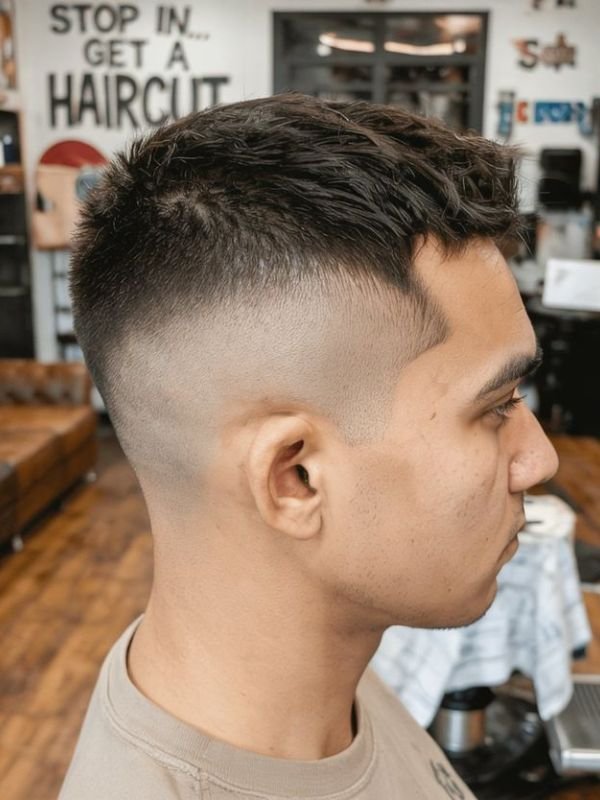
The burst fade crew cut keeps just a touch more length up top than a buzz cut, enough to add some texture without needing daily styling.
It’s a practical, no fuss choice that still looks put together.
15. Burst Fade Side Part
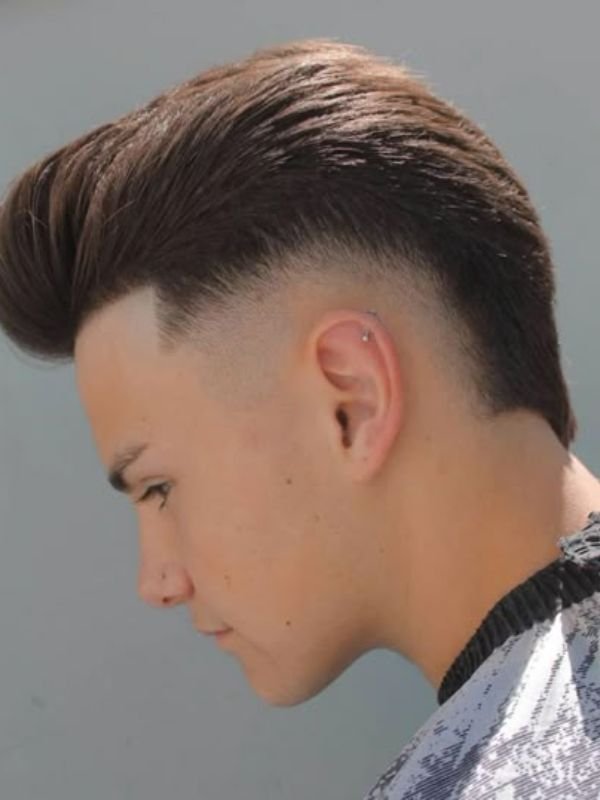
A defined burst fade side part brings some old school charm, a crisp line carved into the hair with length swept to one side.
It’s a classic that works particularly well for straight or fine hair since it holds the part cleanly all day.
16. Burst Fade Hard Part
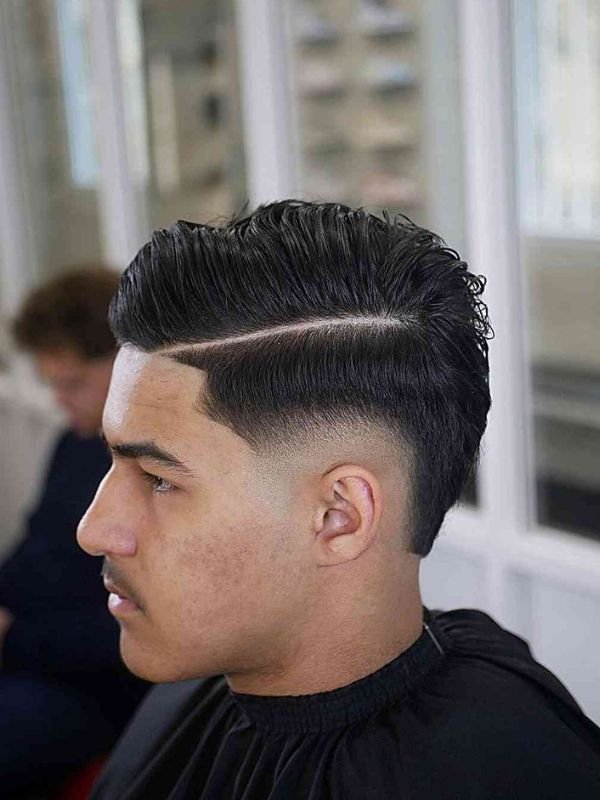
Take the side part further with a burst fade hard part, where the line is shaved in rather than combed in.
It adds definition that lasts through wind, sweat, and everything else your day throws at it.
17. Burst Fade with Beard (Seamless Blend)
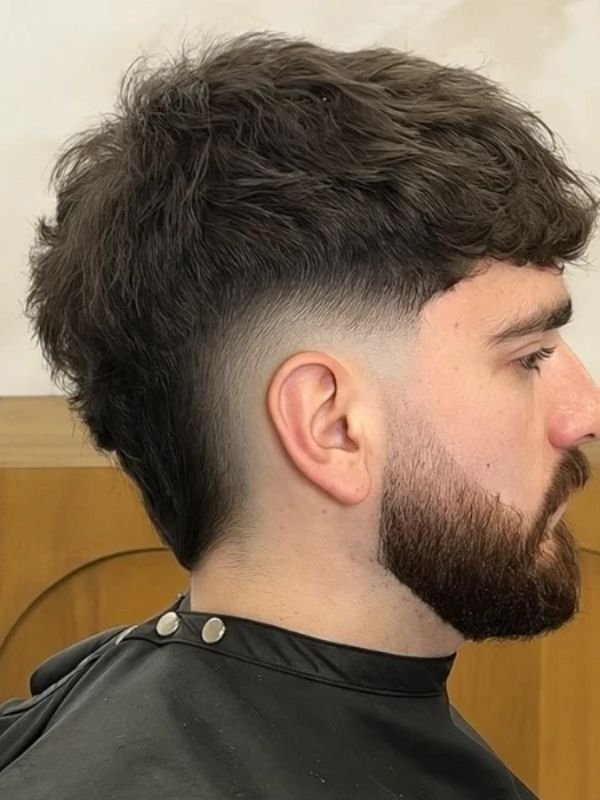
Got facial hair? A burst fade with beard blend connects your sideburn blend into your beard so there’s no harsh line anywhere.
This takes a skilled barber to get right, since the goal is a seamless blend where you can’t tell where the haircut ends and the beard begins.
18. Burst Fade with Hair Design
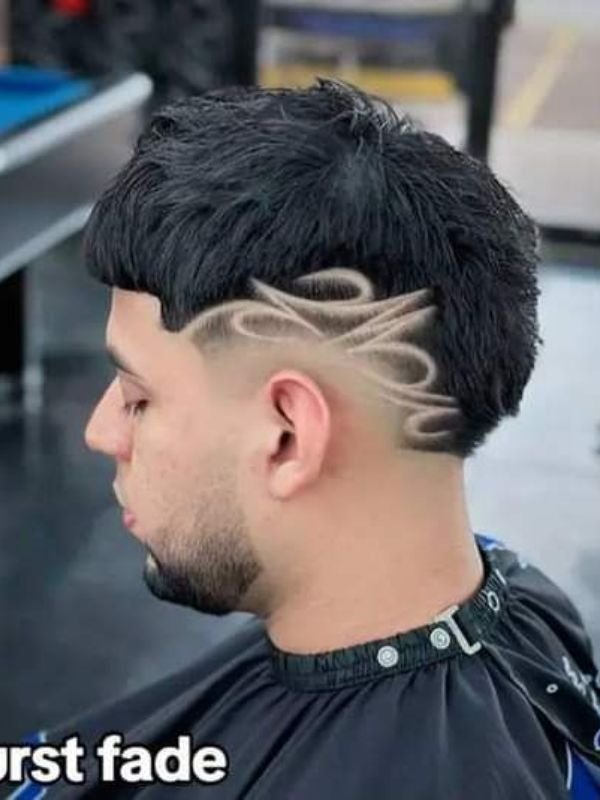
Want to make a statement? A burst fade with design adds shaved patterns, lines, or artwork into the faded section for a totally custom look.
It’s a great option for special occasions or if you just like standing out. Bring a reference photo, designs are hard to describe out loud.
19. Burst Fade Long Hair
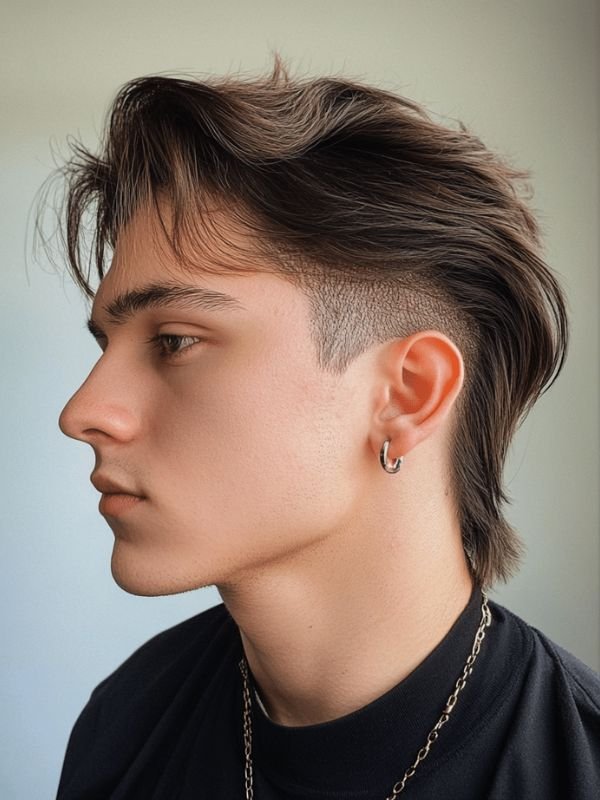
Yes, burst fade long hair is a real combo, and it works surprisingly well. Keep serious length on top while the sides stay tight and faded.
It gives you the best of both worlds, low maintenance sides with the freedom to style your length however you feel that day.
20. Burst Fade Curly Hair
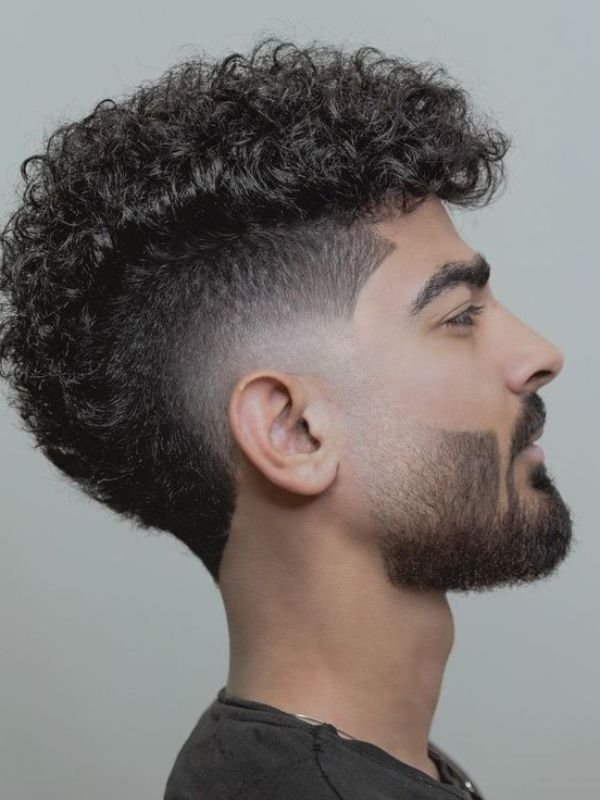
Curly hair burst fade cuts lean into your natural curls instead of fighting them, letting the curls stack up on top while the burst fade cleans up the sides.
The contrast between tight curls and a crisp fade is genuinely one of the best looking combos out there.
21. Burst Fade Wavy Hair
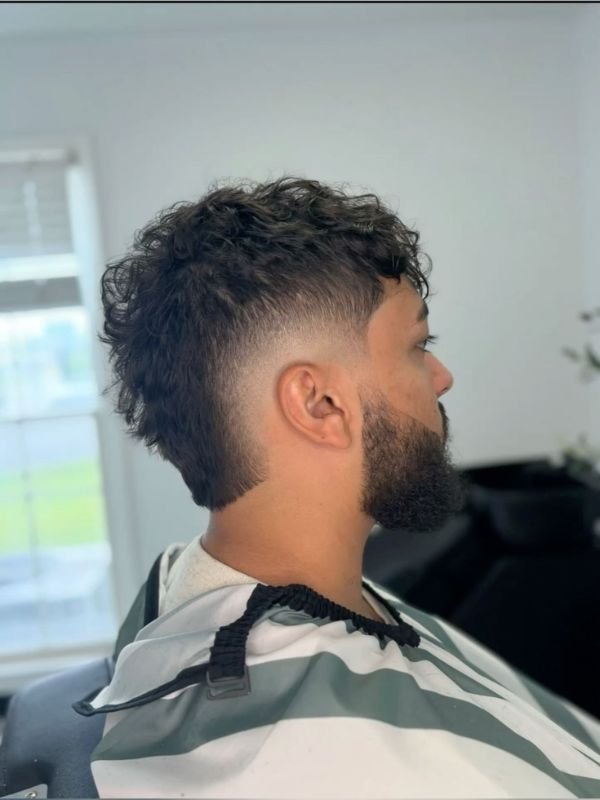
Wavy hair burst fade styles work with your natural waves, adding light texturizing so the waves show without looking flat or heavy.
It’s a low key, effortless look that still has plenty of movement and shape.
22. Burst Fade Straight Hair
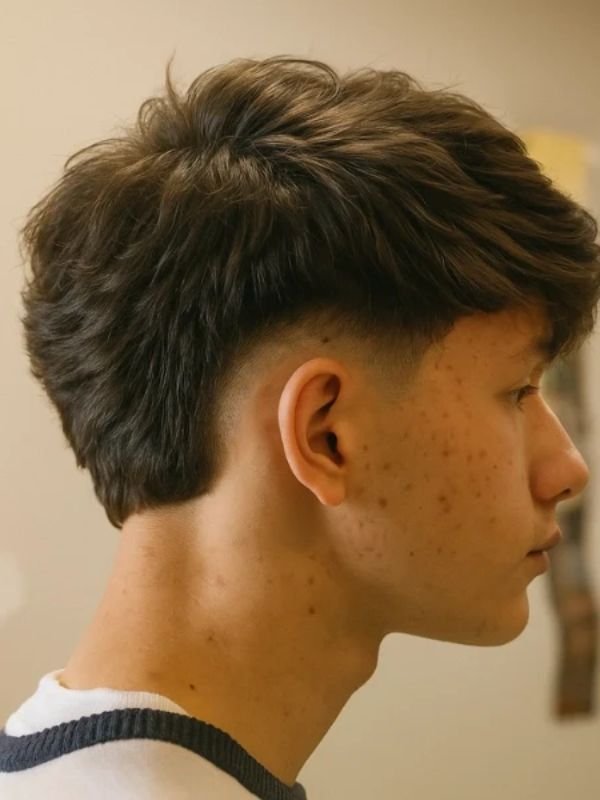
Straight hair burst fade cuts tend to favor crisp lines and defined shapes since straight hair holds a part or a fringe so well.
If your hair is naturally straight, ask your barber about a French crop or side part version to make the most of it.
23. Burst Fade Afro
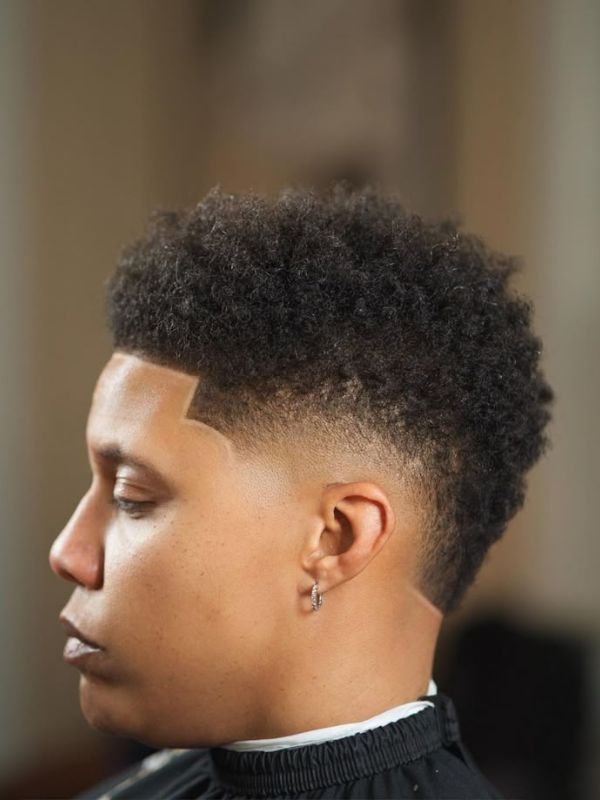
An afro burst fade keeps your coily hair or 4C hair full and rounded on top while the burst fade trims things up neatly at the ear.
It’s a striking combo, tons of natural volume up top with sharp, intentional detail below.
24. Burst Fade Dreadlocks
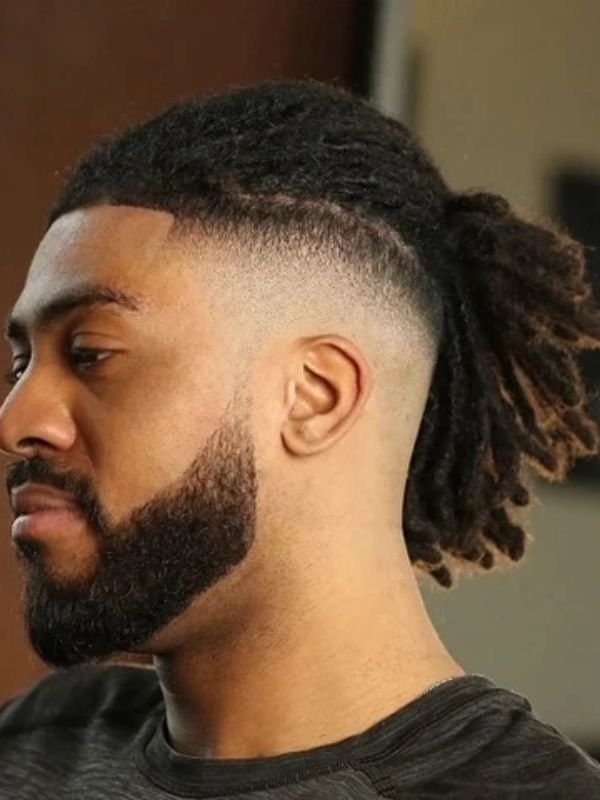
Burst fade dreadlocks bring the same clean sided energy to locs, whether you’re rocking a few chunky locs or a full head.
The fade gives locs a fresher, more structured appearance without asking you to sacrifice any length.
25. Burst Fade Brush Up
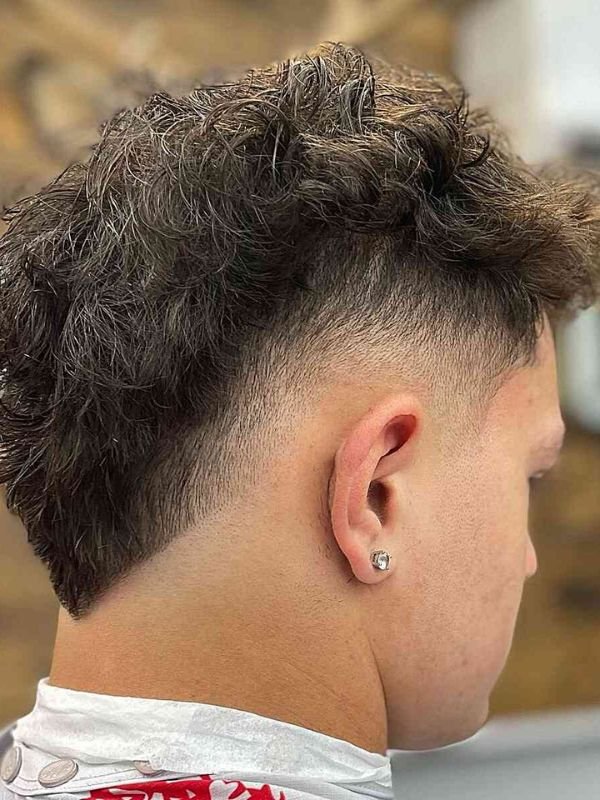
The burst fade brush up uses a round brush and blow dryer to lift the top straight up for extra height and texture.
It’s a bit of a process to style each morning, but the payoff is serious volume that a lot of other cuts can’t match.
26. Burst Taper Fade
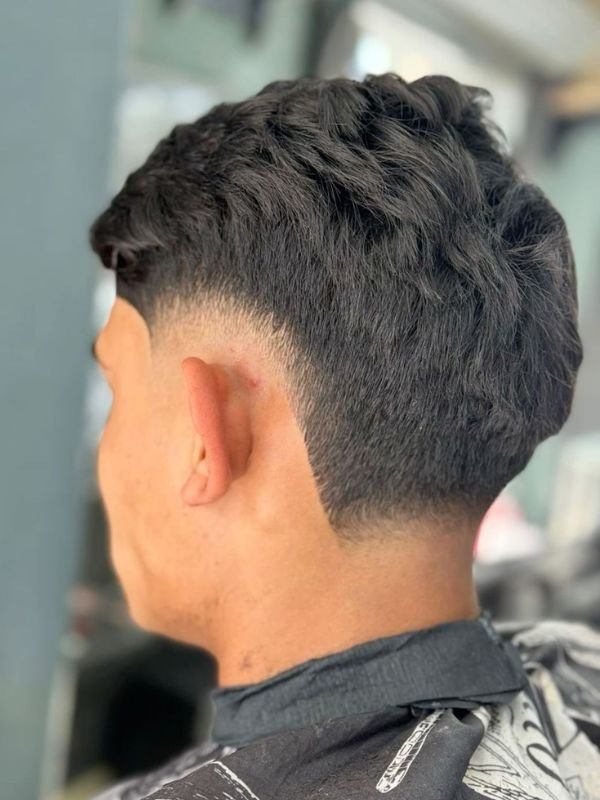
A burst taper fade blends the tight, close to the head feel of a taper with the curved detail of a burst around the ear.
It’s a subtler hybrid, great if you like the idea of a burst fade but want something a touch more understated.
27. Burst Fade Ivy League
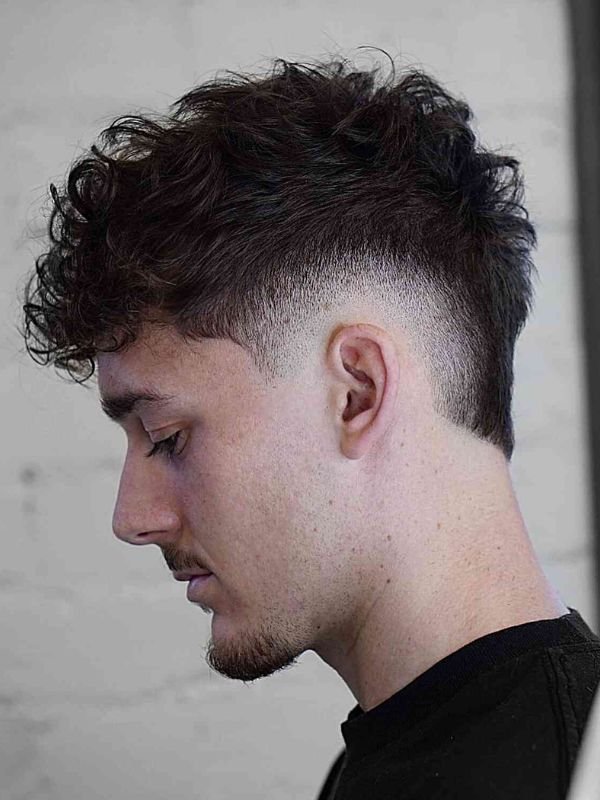
The burst fade Ivy League keeps the top a bit longer than a standard crew cut, styled forward or with a light side sweep.
It’s preppy, polished, and works well in professional settings without looking boring.
28. Burst Fade Side Swept Fringe
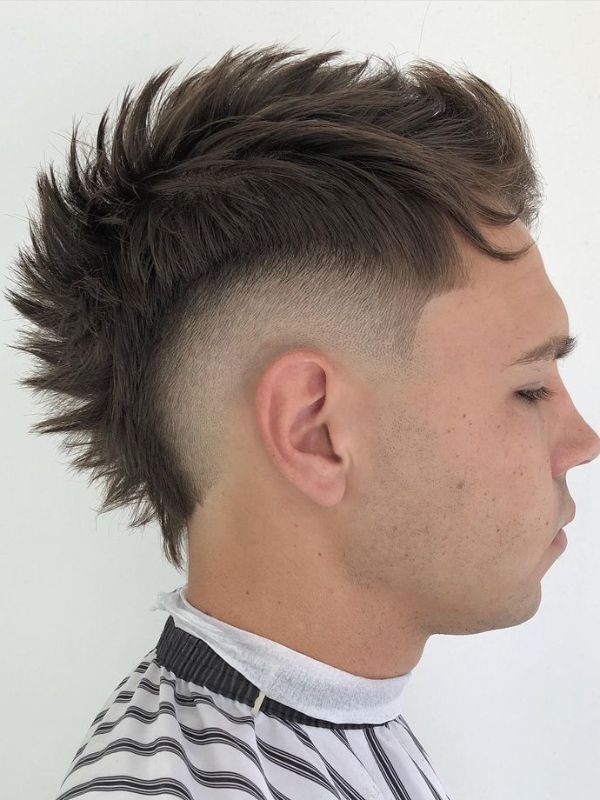
A burst fade side swept fringe angles the front section across the forehead instead of straight down, adding a softer, more stylish shape.
It suits guys who want something trendy but still easy to manage day to day.
29. Burst Fade Modern Mullet
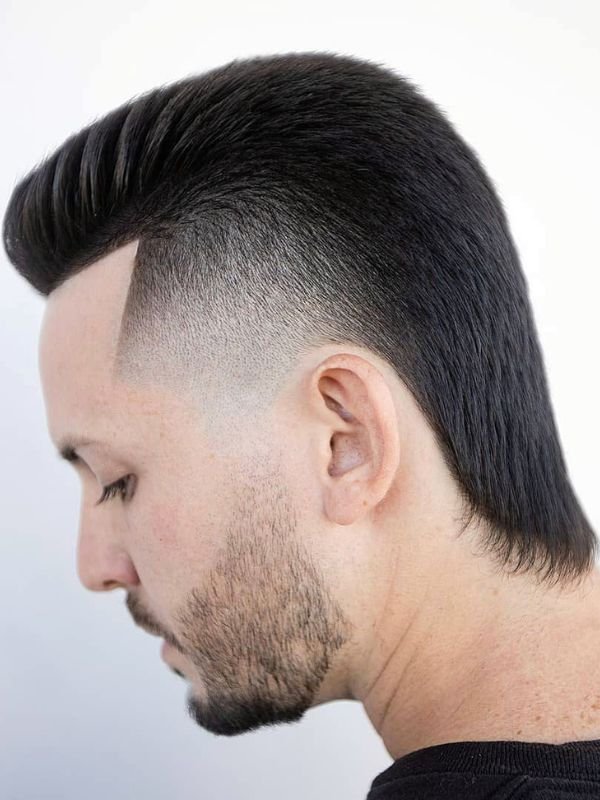
The burst fade modern mullet is a cleaned up take on the mullet idea, shorter and more tapered than the old school version, with the fade doing the heavy lifting.
It’s less committal than a full mullet if you’re on the fence about the trend.
30. Burst Fade High Top
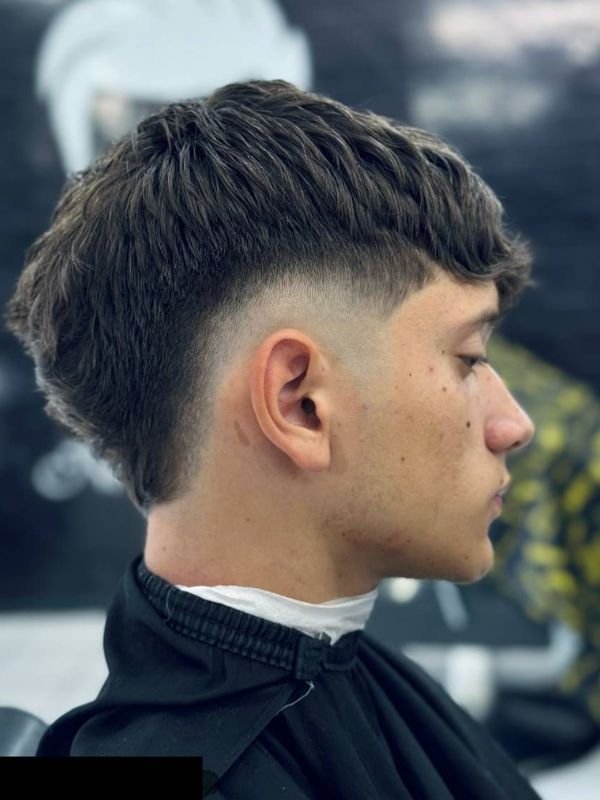
A throwback with staying power, the burst fade high top keeps a boxy, voluminous top while the burst fade sides keep everything sharp underneath.
It’s a bold statement cut that works best with thicker or coilier hair types that hold shape well.
31. Burst Fade Caesar Cut
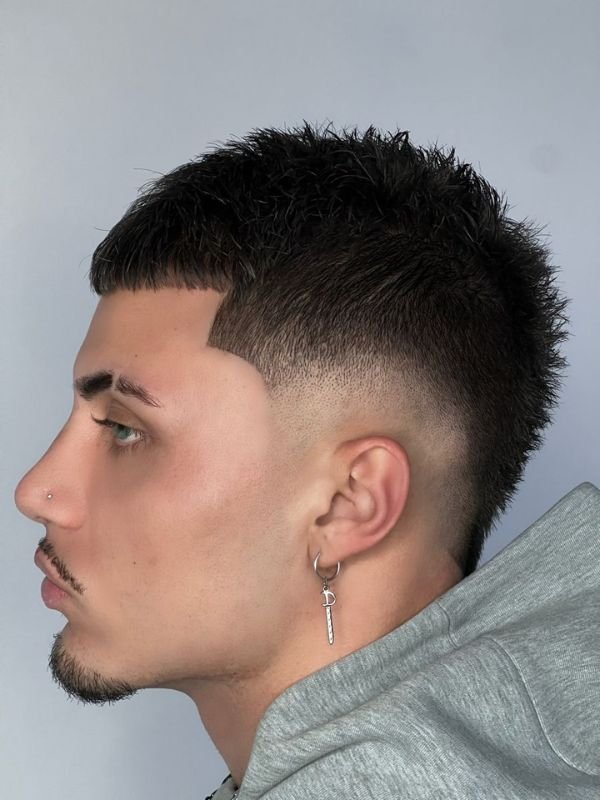
The burst fade Caesar cut pairs short, horizontally textured fringe with a tight burst fade, giving off a clean, no nonsense vibe.
It’s an easy cut to maintain and it suits pretty much every face shape.
32. Burst Fade Spiky Hair
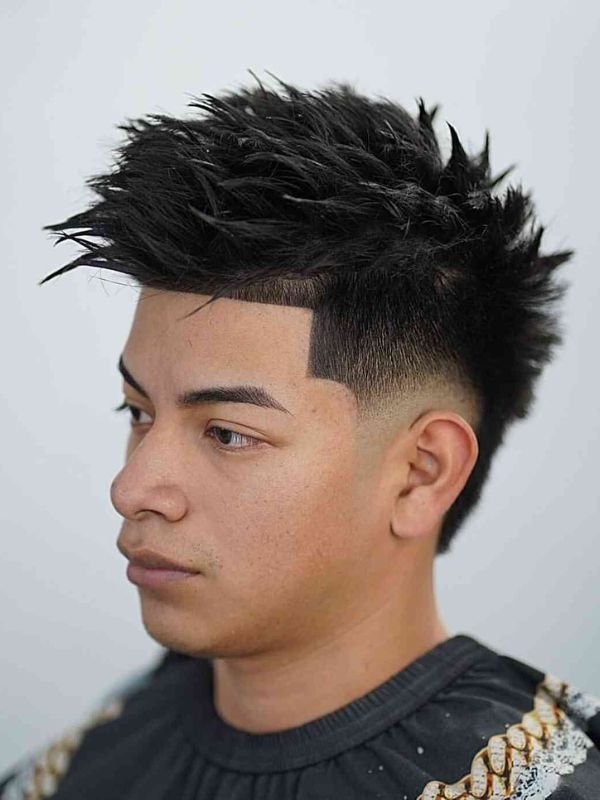
For guys who miss the early 2000s a little, burst fade spiky hair brings back textured, gel defined spikes on top with a modern faded base.
It’s playful without looking dated, especially with the sharper fade underneath.
33. Burst Fade Messy Fringe
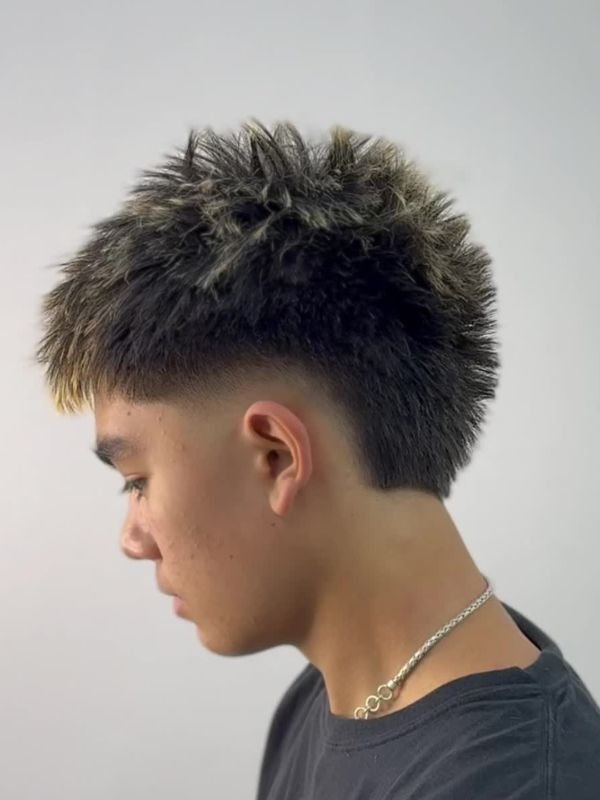
A burst fade messy fringe keeps things deliberately undone up top, tousled and textured, while the burst fade keeps the sides looking sharp and controlled.
It’s a great everyday option if you don’t love spending time styling.
34. Burst Fade Flat Top
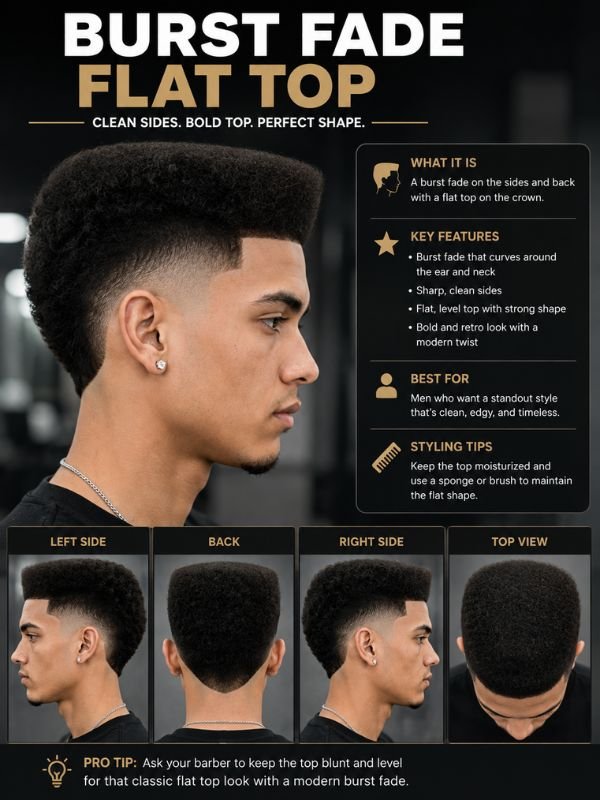
The burst fade flat top is a bold, structured look with a perfectly flat, squared off top and a burst fade underneath for contrast.
It takes some skill to cut and style right, so look for a barber who’s done a few before.
35. Burst Fade Disconnected Slick Back
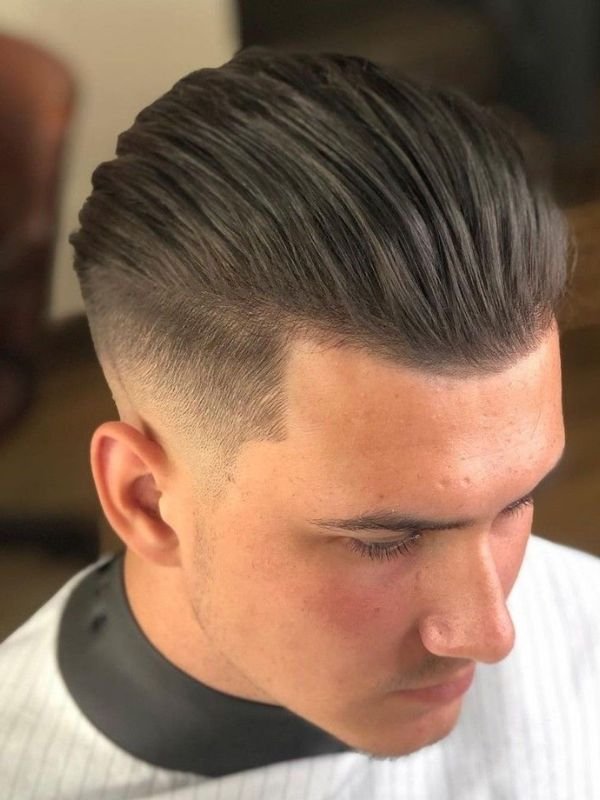
A burst fade disconnected slick back creates a visible gap between the top and sides before the fade even starts, adding extra drama to the slick back look.
It’s a striking, high fashion take on a classic style.
36. Burst Fade Braids & Cornrows
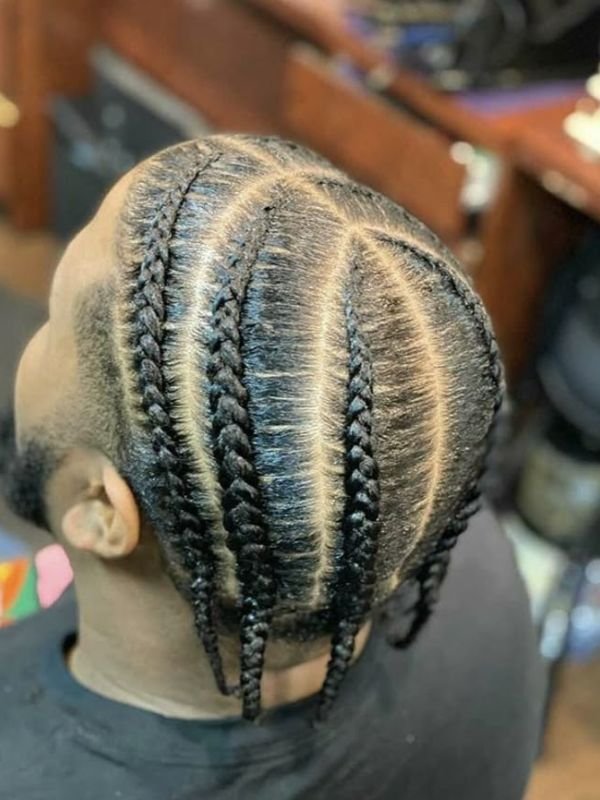
Braids or cornrows paired with a burst fade give you intricate detail on top and clean definition at the sides.
It’s a versatile combo that works for a huge range of hair lengths and patterns.
37. Burst Fade Twists
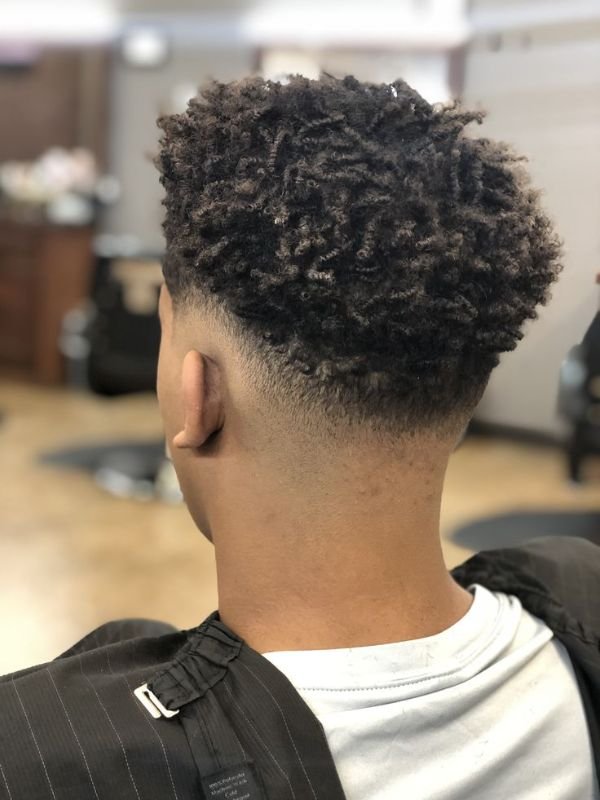
Burst fade twists bring texture and dimension on top, with the fade providing that same crisp, curved contrast at the ear.
It’s a lower maintenance alternative to braids while still delivering plenty of style.
38. Burst Fade Line Up (Shape Up)
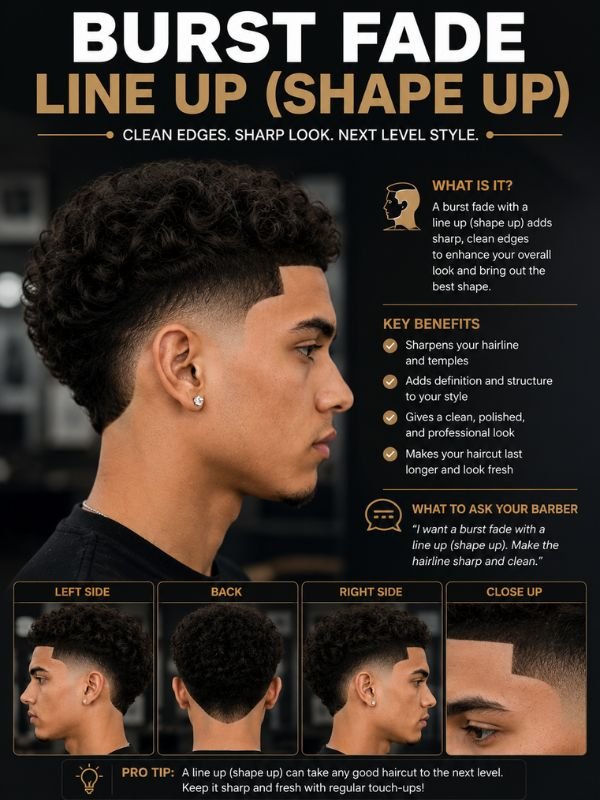
Finish any burst fade with a line up, also called a shape up, for crisp, razor sharp edges around the hairline and beard.
It’s the small detail that makes the whole cut look freshly done, even days after your actual appointment.
Who Does a Burst Fade Suit?
Honestly, almost everyone can wear some version of a burst fade haircut. The style is flexible enough to adjust for face shape, head shape, and every hair type out there.
The trick isn’t whether you can pull it off, it’s picking the right height, length, and texture combo for your specific features.
Best Burst Fades by Face Shape
- Oval face: almost anything works, try a burst fade for oval face with a textured crop or quiff
- Round face: go for height on top, a pompadour or brush up style adds length and balances roundness
- Square face: softer, textured tops work best to ease the strong jawline
- Oblong face: keep some width on the sides rather than going too tall on top
- Long face: a fringe or side swept style shortens the appearance of the face
- Diamond face: a side part or comb over balances out narrower forehead and chin
- Heart shaped face: volume at the sides and a shorter top helps balance a wider forehead
Best Burst Fades by Hair Type & Texture
Your hair texture decides how much a cut will cooperate. Thick hair holds shape and volume easily, so pompadours and high tops look great. Fine hair does better with shorter, textured styles that fake density.
Curly fade combinations lean into natural texture rather than forcing it straight, while straight hair does best with crisp, defined lines like a hard part or comb over.
How Do You Choose the Right Burst Fade?
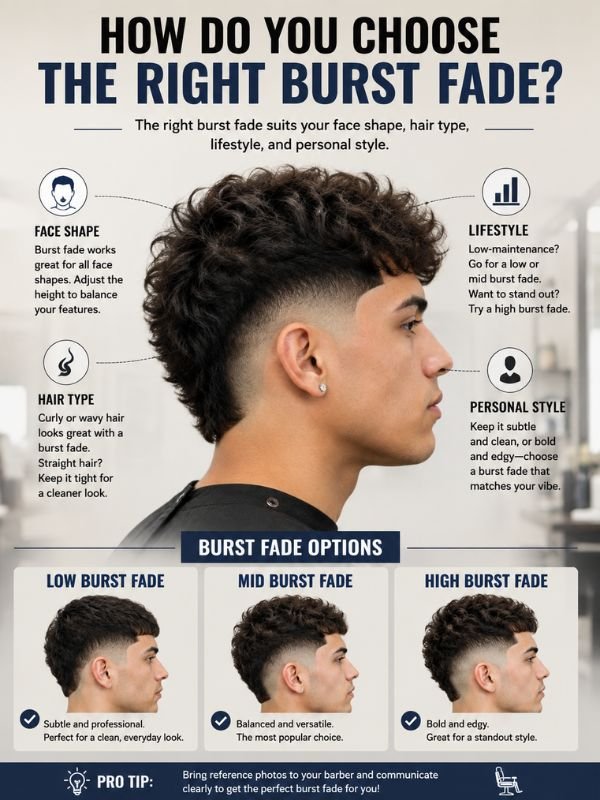
Start with your daily routine. If you’re not a morning person, skip the styles that need fifteen minutes with a blow dryer and pick something like a buzz cut or crew cut instead.
Next, think about your hair’s natural behavior. Fighting your texture every single day gets old fast, so work with what you’ve got rather than against it.
Finally, factor in how often you can realistically get to the barber. Higher fades and bolder designs need more frequent trims to stay sharp, while lower, subtler versions can stretch a bit longer between visits.
What Should You Tell Your Barber? (Exact Guard Numbers & Guide)
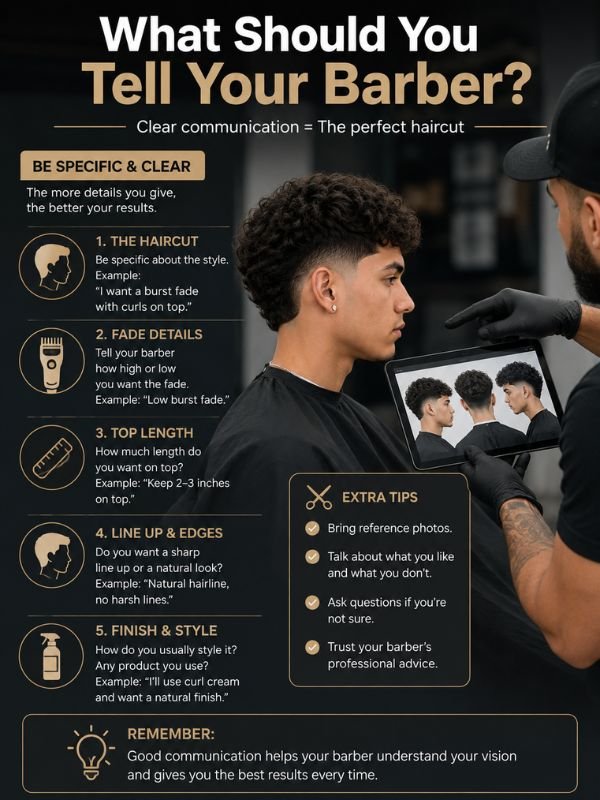
Clear communication saves you from a bad haircut. Here’s what to bring up during your barber instructions.
- Mention “burst fade” specifically, not just “fade,” so they know you want the arc around the ear
- Give a fade height: low, mid, or high
- Ask for a guard #1 or #2 near the skin, blending up to a #3 or #4 as it reaches the top
- Bring a haircut reference photo, even a rough one helps avoid miscommunication
- Mention if you want a hard part, beard blend, or hair design added
A good barber will also check your neckline and adjust the sideburn blend so everything looks intentional, not just cut short.
How to Style a Burst Fade for Maximum Volume & Texture
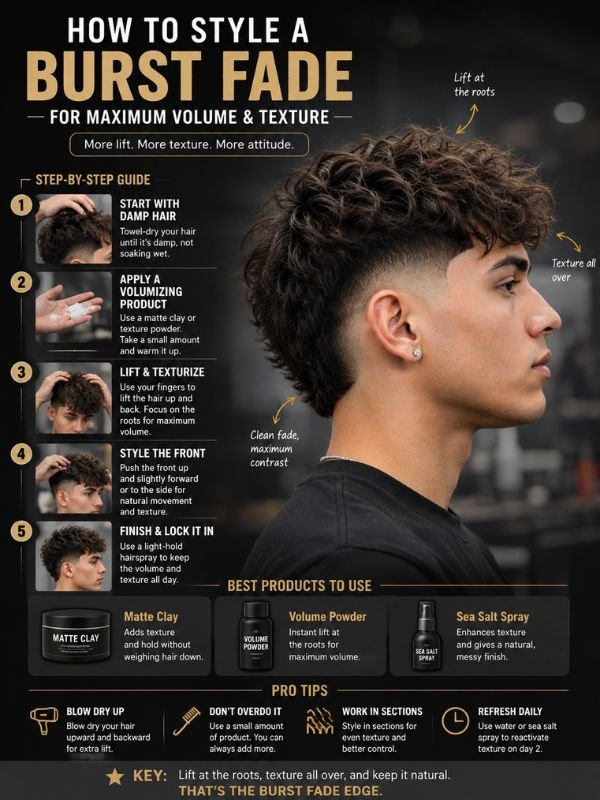
Start with damp, towel dried hair rather than soaking wet. Product distributes more evenly and you’ll get a better sense of how it’ll actually sit once dry.
Use a lightweight texturizing product for natural, piecey looks, or a stronger hold styling product if you’re going for something like a pompadour or slick back that needs to stay put all day.
A quick blow dry with a round brush adds serious hair volume at the roots, which matters most for styles like the brush up or high top where lift is the whole point.
How Often Should You Get a Maintenance Trim?
Fade maintenance depends heavily on your fade height. Low burst fades can usually stretch three to four weeks between visits without losing their shape.
Mid and high burst fades grow out faster visually, since the contrast is what makes them look sharp in the first place. Plan on a trim every two to three weeks to keep those lines crisp.
If you’ve got a hair design or a particularly bold fade line, you might need a touch up even sooner, sometimes within a week or two.
What Is the Biggest Mistake Men Make with a Burst Fade?
Going in without a clear reference is probably the number one issue. “Just fade it” leaves way too much room for interpretation, and burst fades especially depend on precise placement around the ear.
The second biggest mistake is neglecting the grow out. A burst fade that looked amazing on day one can look messy and undefined by week four if you skip the maintenance trim.
Lastly, plenty of guys pick a style because they saw it online, not because it suits their head shape or hair type. What works on someone else’s curly hair might not translate the same way onto straight, fine hair, so always loop your barber in on what’ll actually work for you.
Frequently Asked Questions (FAQs)
Is a burst fade the same as a taper fade?
No. A taper fade stays close to the head throughout, while a burst fade curves around the ear in a distinct arc, showing more skin in that specific spot.
Does a burst fade suit curly hair?
Yes, curly hair burst fade combinations are some of the most popular right now, since the contrast between tight curls and a clean fade looks great.
How long does a burst fade take to grow out?
Most guys start noticing the lines softening around the two to three week mark, depending on how fast your hair grows and how high the fade sits.
Can I do a burst fade at home?
It’s possible with clippers and guards, but the curved shape around the ear is tricky to get symmetrical without practice. A barber visit is worth it, at least for your first one.
What’s the best burst fade for a receding hairline?
Shorter tops with a defined fringe, like an Edgar cut or Caesar cut, tend to work well since they don’t draw attention to the hairline.
Conclusion
A burst fade haircut gives you room to experiment while still looking clean and put together. Whether you go low and subtle or high and bold, the curved fade around the ear adds detail that a standard fade just doesn’t have.
Pick a style that matches your hair type, your face shape, and honestly, how much time you’re willing to spend styling it each morning. Bring a reference photo, communicate clearly, and keep up with your maintenance trims.
Got a favorite burst fade from this list? Save this guide for your next barber appointment, and drop a comment letting us know which style you’re trying next.