

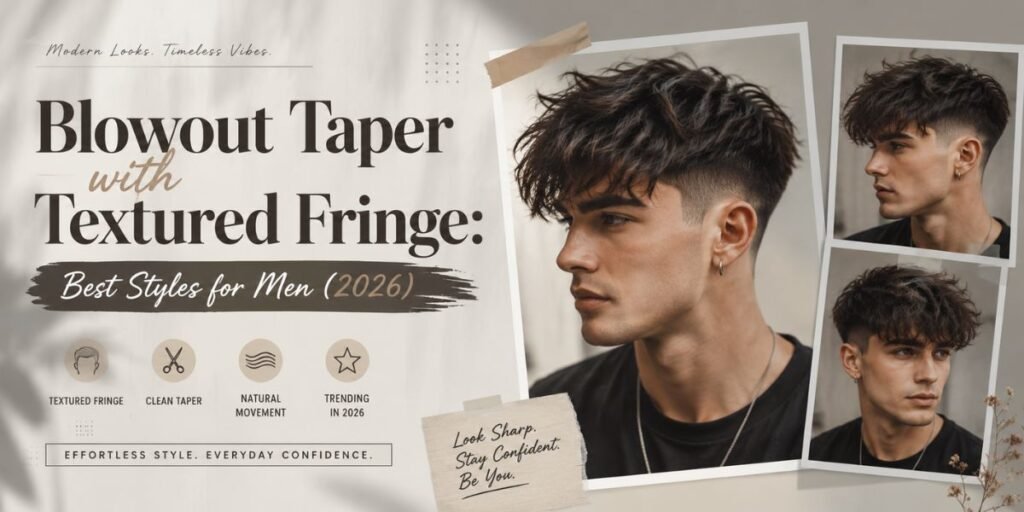
A blowout taper textured fringe pairs lifted, voluminous hair on top with tight, blended sides and a piece of forward fringe that falls just above the brow. It’s the haircut guys ask for when they want height without looking stiff. If you’ve been scrolling through men’s hairstyles 2026 and keep landing on the same photo, this is probably it.
This guide breaks down every version of the cut, how to style it at home, and exactly what to tell your barber so you don’t leave the chair disappointed. Grab a coffee. Let’s get into it.
What Defines a Blowout Taper Textured Fringe
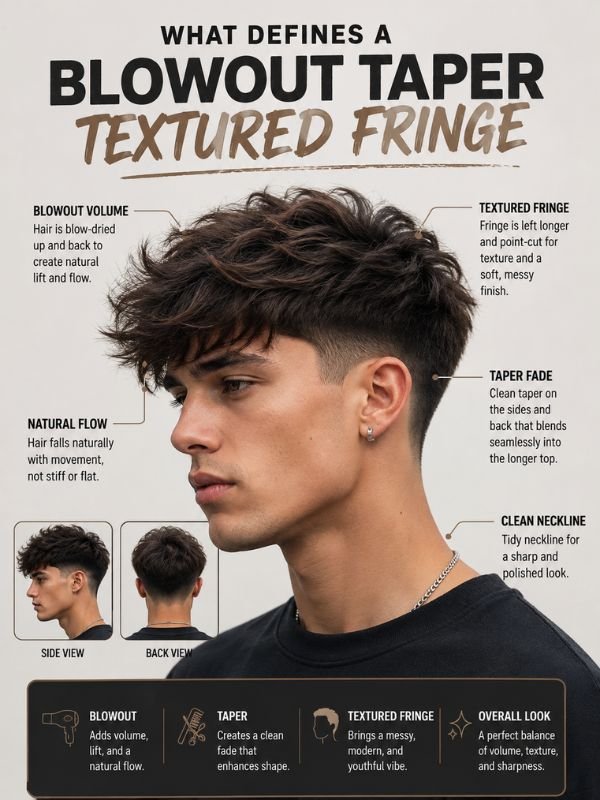
At its core, this is a taper haircut on the sides paired with a lifted crown and choppy, piecey fringe on top. The sides fade gradually into the skin or stay short and neat, while the top gets left long enough to blow dry upward and forward.
The magic is in the contrast. Short, clean sides make the top look bigger than it actually is. Point cutting on the fringe breaks up any blocky edges, so the hair falls in soft, irregular pieces instead of one heavy chunk.
What makes it different from a plain blowout haircut is the fringe itself. Instead of hair swept back or to the side, you get a forward swept fringe that sits low on the forehead, usually landing somewhere between the brow and the eyebrow length mark. It’s a small detail that changes the whole vibe of the cut.
Blowout Taper Textured Fringe Variations
Not every face, hair type, or lifestyle calls for the exact same version of this cut. That’s honestly the best part about it. The layered structure on top can be adjusted for thick hair, fine hair, curls, waves, or straight strands without losing the core shape.
Below are the main variations barbers actually cut, broken down by hair length, texture, and taper depth. Pick the one that matches your starting point and bring a reference photo to your next haircut appointment.
Blowout Taper Textured Fringe Short Hair
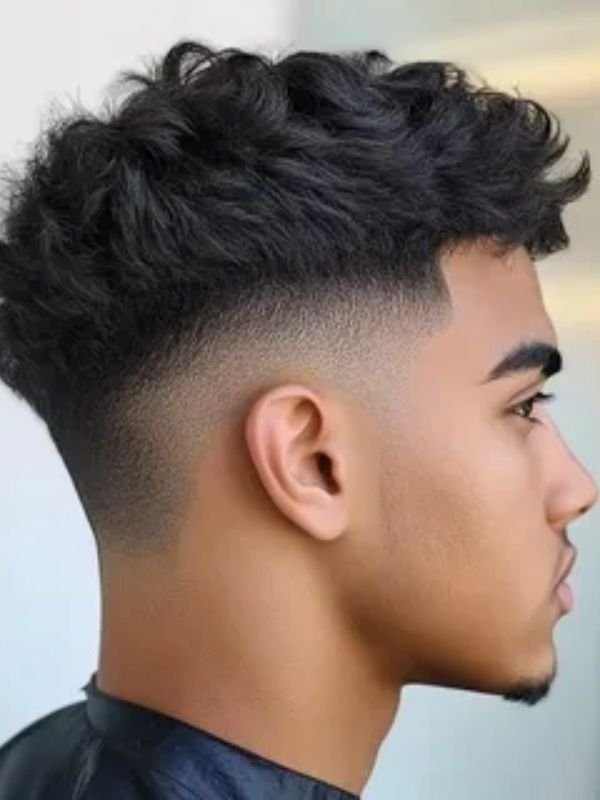
Short versions keep the top around two to three inches, which is plenty of length to build crown height without needing a ton of product. The fringe stays short too, often sitting right above the eyebrows instead of covering them.
This length works well if you’ve got fine hair since there’s less weight pulling the style down. A little texture powder at the root does most of the lifting here, and you won’t need to touch it up much through the day.
Guys who don’t love spending twenty minutes on hair in the morning tend to gravitate toward this one. It’s close to a low maintenance haircut while still looking sharp and current.
Blowout Taper Textured Fringe Straight Hair
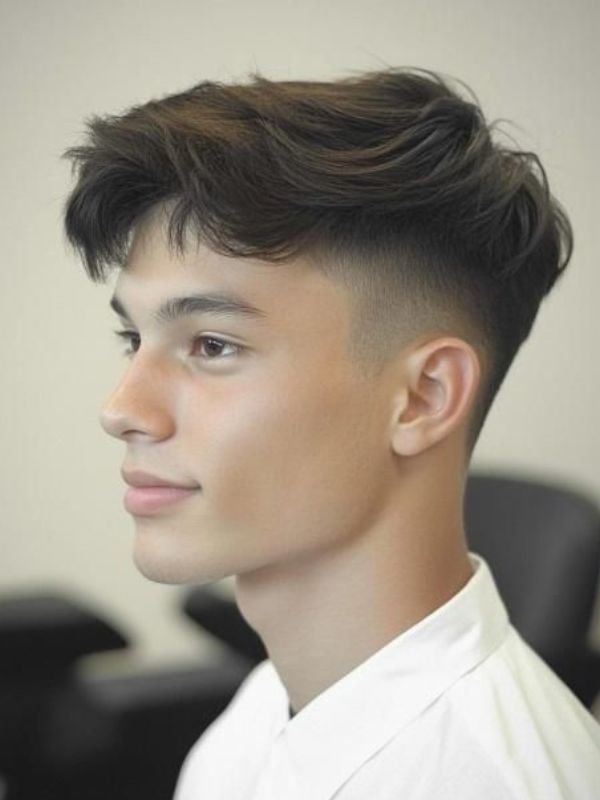
Straight hair actually makes the blowout technique easier because there’s no curl pattern fighting against the direction you’re brushing. A round brush and blow dryer combo will lift the roots and push the fringe forward without much resistance.
The tricky part with straight strands is holding the shape once it’s dry. Straight hair tends to fall flat by midday, so a matte clay or light texturizing spray helps lock the lift in place after styling.
If your hair is naturally straight and on the thinner side, ask your barber to leave slightly more length on top. That extra length gives the round brush something to grip, which makes a real difference in how long the volume lasts.
Blowout Textured Fringe with Mid Taper
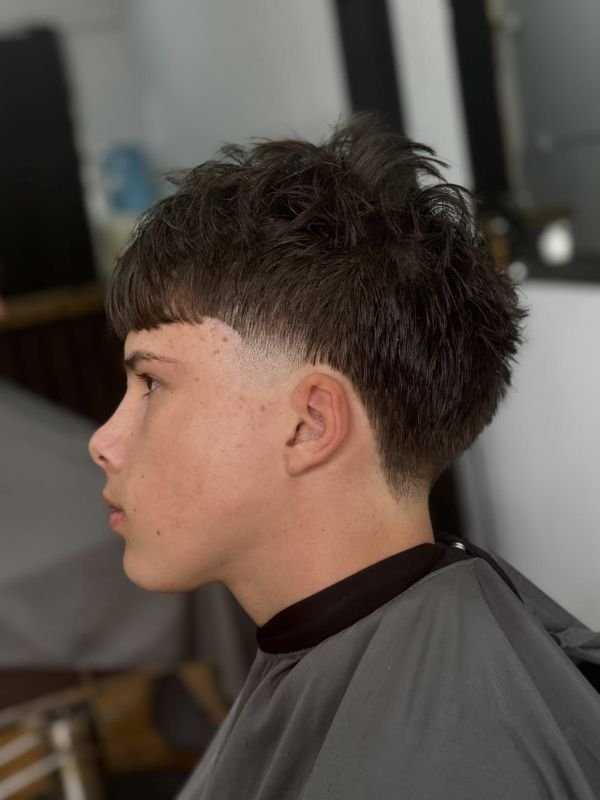
A mid taper fade starts blending around the temple area, landing between a low and high fade in terms of where the shortest hair begins. It’s a solid middle ground if you want visible contrast without going too dramatic.
This version tends to suit rounder face shapes well, since the higher blend point adds a bit of visual length to the sides of the face. Paired with a lifted, textured top, it creates a nice balance between sharp and soft.
Barbers usually recommend this taper depth for guys who want their haircut to read as intentional from across the room, not just up close. It photographs well too, which matters if you’re the type who takes a lot of pictures.
Blowout Taper with Textured Fringe Low Taper
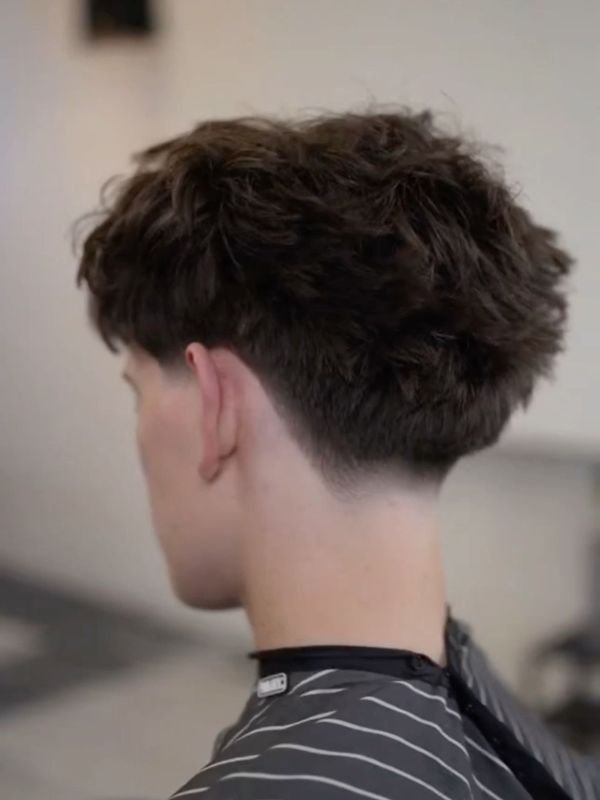
A low taper fade keeps things subtle. The blend starts much closer to the ears and neckline, so the taper is barely noticeable unless someone’s looking for it. This is the go to choice for anyone in a conservative workplace.
Because the contrast is softer, all the attention goes to the top of the head, which is exactly where the textured fringe and lifted crown shine. The soft taper also grows out more gracefully between cuts.
If you’re new to this haircut altogether, starting with a low taper is a smart, low risk way to test the style before committing to something bolder on your next visit.
Blowout Taper with Textured Fringe Curly Hair
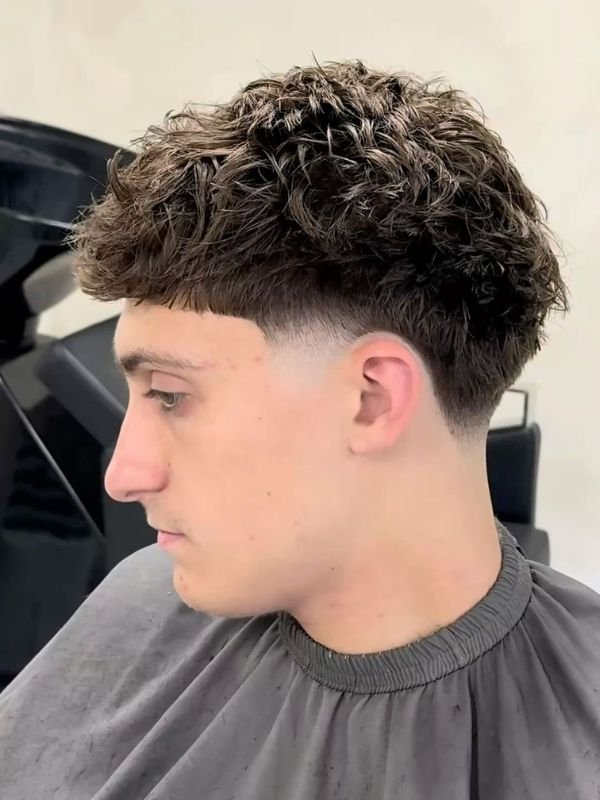
Curls add a layer of complexity, but they also add built in texture that straight hair just doesn’t have. A curly textured fringe naturally falls in separated pieces, so you’re already halfway to the look before you even pick up a brush.
The trick with curly hair is controlling frizz while still keeping the natural texture. A light volumizing product worked through damp curls, followed by air drying or a diffuser, keeps the shape without flattening the natural pattern.
Ask your barber to cut curl by curl rather than cutting it straight and letting it curl up afterward. It sounds like a small thing, but it changes how evenly the fringe falls once it dries.
Blowout Taper with Textured Fringe Long Hair
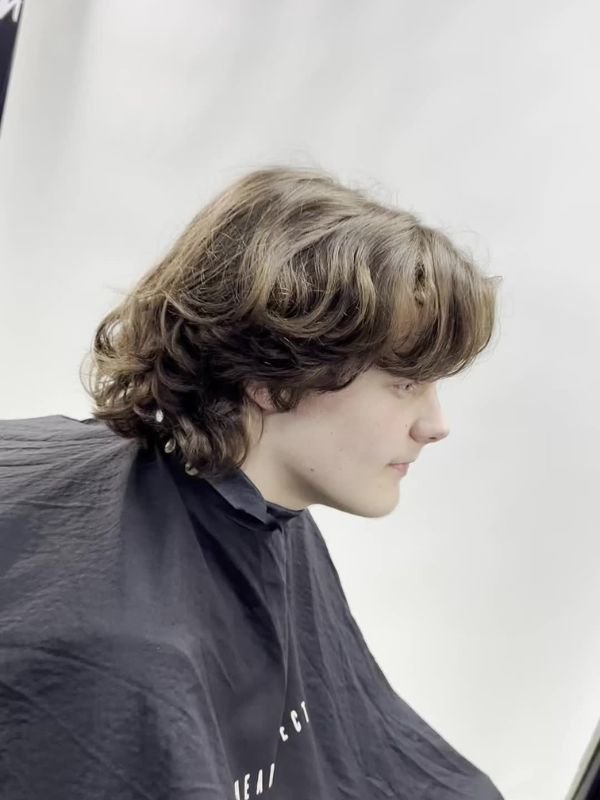
Longer versions give you more hair movement and more styling options overall. With extra length, the fringe can be pushed further forward, almost brushing the eyebrows, for a moodier, editorial kind of look.
This length demands more from your daily styling routine though. You’ll likely need a paddle brush to control the extra hair while blow drying, plus a stronger hold product to keep the weight from collapsing the lift.
Wavy hair guys tend to love this length because the waves add natural piecey texture without much extra effort. If your hair already has some bend to it, longer is often the easier route, not the harder one.
Blowout Taper with Textured Fringe for Asian Hair
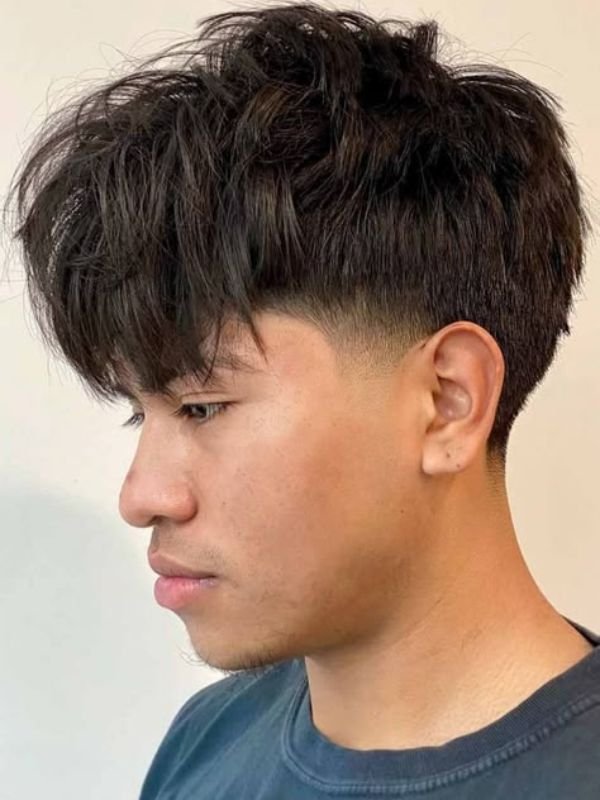
Thicker, straighter Asian hair types often have a lot of natural density, which can work in your favor for this cut. There’s already enough natural hair volume to build the lifted crown without heavy product buildup.
Where it gets tricky is direction. Dense, straight strands can be stubborn about staying lifted, so barbers often add internal layers to remove bulk while keeping the outer layered structure intact for shape.
A strong hold texturizing spray paired with a round brush blow dry usually gets the best results here. Some guys also find a light perm on top helps the fringe hold its forward direction with far less daily effort.
How to Style a Blowout Taper Textured Fringe
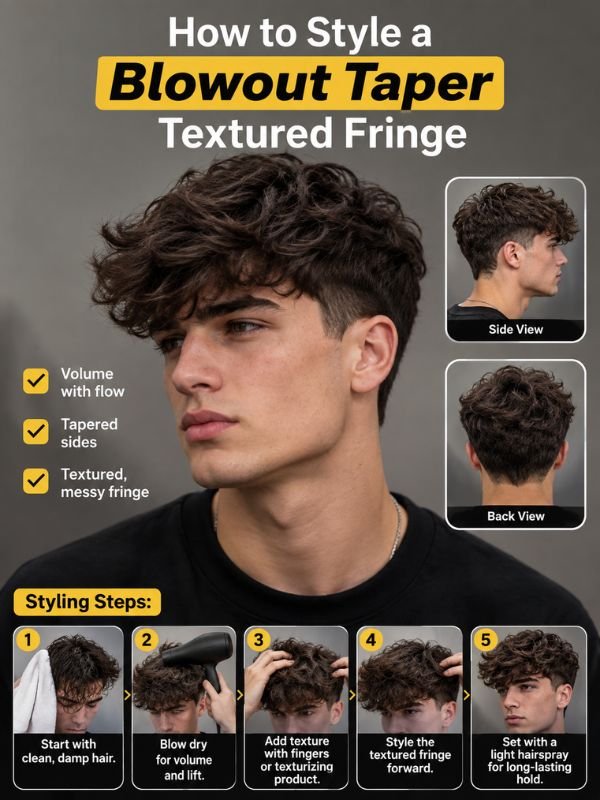
Getting this look right at home comes down to technique more than product. Start with damp, towel dried hair, never soaking wet, since dripping hair takes forever to dry and loses lift in the process.
Use a round brush or vent brush to pull sections up and slightly forward while running the blow dryer underneath. Focus on the roots first, since that’s where all your hair lift actually comes from, not the ends.
Once it’s fully dry, work a small amount of matte paste or matte clay between your palms and run it through with your fingers, not a comb. Finish by pinching the fringe into pieces for that piecey fringe finish everyone’s after.
If your hair falls flat by the afternoon, keep a travel size texturizing spray or dry shampoo at your desk. A quick spritz at the roots brings back the volume without needing a full restyle.
What to Ask Your Barber For
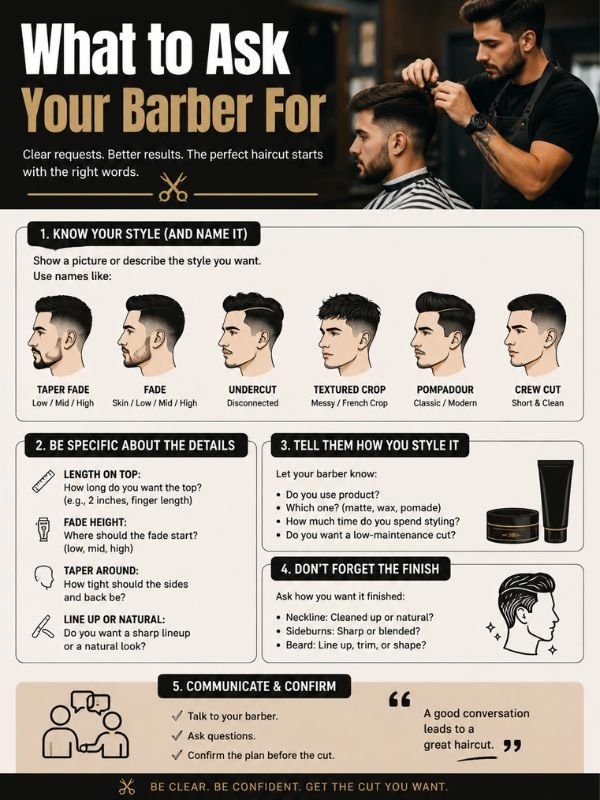
Walking into a barber shop with the right words saves everyone time. Ask for a taper fade on the sides, specifying low taper or mid taper fade depending on the contrast level you liked in your research.
For the top, mention you want enough length left for a blowout haircut, plus point cutting through the fringe so it doesn’t sit as one blunt line. Bringing a reference photo on your phone genuinely helps more than trying to describe it in words.
Don’t forget to mention your neckline taper and sideburn taper preferences too. Some guys want a hard, defined edge; others prefer it soft and blended. Your barber can’t read your mind, so speak up before the clippers come out.
Maintenance and Upkeep
This cut isn’t a wash it and forget it style, but it’s not high maintenance either once you get the hang of it. Plan on a taper cleanup every two to three weeks to keep the sides sharp and the blended sides looking fresh.
Between visits, a bit of dry shampoo at the roots on non wash days helps maintain crown volume without stripping your hair with daily washing. Overwashing actually works against you here, since natural oils help hold texture.
Keep your product routine simple. One styling product for hold, one texture powder or spray for volume, and you’re set. Overloading with five different products usually backfires and just weighs the top down.
Best Face Shapes for This Cut
Round faces tend to benefit the most from this style, since a lifted crown adds vertical height that visually slims the face. Pair that lift with a mid taper fade for extra contrast on the sides, and the whole face reads longer.
Square jawlines look sharp with almost any variation here, but a forward fringe that lands closer to the eyebrow length softens strong angles nicely. It keeps the cut from looking too harsh or overly structured.
Longer, narrower faces should be a bit more careful with height. Keeping the top a touch shorter and skipping heavy crown volume stops the face from looking stretched. A low taper with minimal lift usually works best in this case.
Common Mistakes to Avoid
The biggest mistake guys make is skipping the blow dry step entirely and just letting hair air dry flat. Without that root lift, the whole point of the cut disappears, and you’re left with a regular taper haircut and nothing else.
Overusing product is another common trap. Piling on matte paste thinking it’ll hold better usually just clumps the hair and kills the textured finish everyone’s going for. A little goes a long way here.
Lastly, don’t wait too long between visits. Once the fringe grows past the eyebrows and the sides lose their gradual taper, the whole silhouette shifts, and it stops looking like the cut you originally asked for.
Explore More Styles
If this cut isn’t quite it for you, there’s a whole world of taper haircut variations worth a look. A classic low taper fade with a side part offers a cleaner, more traditional finish for office settings.
For something bolder, a mid taper fade combined with a textured crop skips the fringe entirely and leans into shorter, spikier texture on top. It’s a great pick if you liked the taper but want less daily styling effort.
Curly guys might also want to check out a curly fringe paired with a soft taper and no blowout step at all, letting the natural texture do most of the work on its own.
Final Thoughts
The blowout taper textured fringe earns its spot as one of the standout trendy men’s haircut picks of the year because it flexes to fit almost any hair type. Straight, curly, thick, thin, it adapts.
What really makes it work is the combination of a clean, gradual taper on the sides against a soft, effortless hairstyle on top. That contrast is doing most of the heavy lifting visually, even on days you barely style it.
Try one variation from this guide at your next haircut appointment, and don’t be shy about telling your barber exactly what you want. Drop a comment below if you’ve tried this cut, we’d love to hear how it turned out for you.
FAQs
How long does hair need to be for a blowout taper textured fringe?
Most barbers want at least two to three inches on top to build proper height and to give the fringe enough length to fall forward naturally.
Does this haircut work with fine hair?
Yes, though fine hair benefits from a lighter product approach. A texture powder at the root does more for lift than heavy pastes, which can weigh fine strands down.
How often should I get a taper cleanup?
Every two to three weeks keeps the blended sides sharp. Waiting longer is fine cosmetically, but the contrast against the top will soften noticeably.
Can curly hair pull off this style?
Definitely. Curly textured fringe actually needs less styling effort since curls already create natural separation and piecey texture on their own.
What’s the difference between low taper and mid taper for this cut?
A low taper blends closer to the neckline for a subtle look, while a mid taper fade starts higher and creates more visible contrast against the top.
Is this haircut hard to maintain on a busy schedule?
Not really. Once you get the blow dry technique down, most guys can style it in under five minutes each morning. A dry shampoo on off days cuts that time down even further.
Will this style work for thinning hair?
Yes, and it can actually help. The lifted crown and layered structure create the illusion of denser hair, which is why a lot of barbers suggest this exact cut to clients dealing with early thinning.